
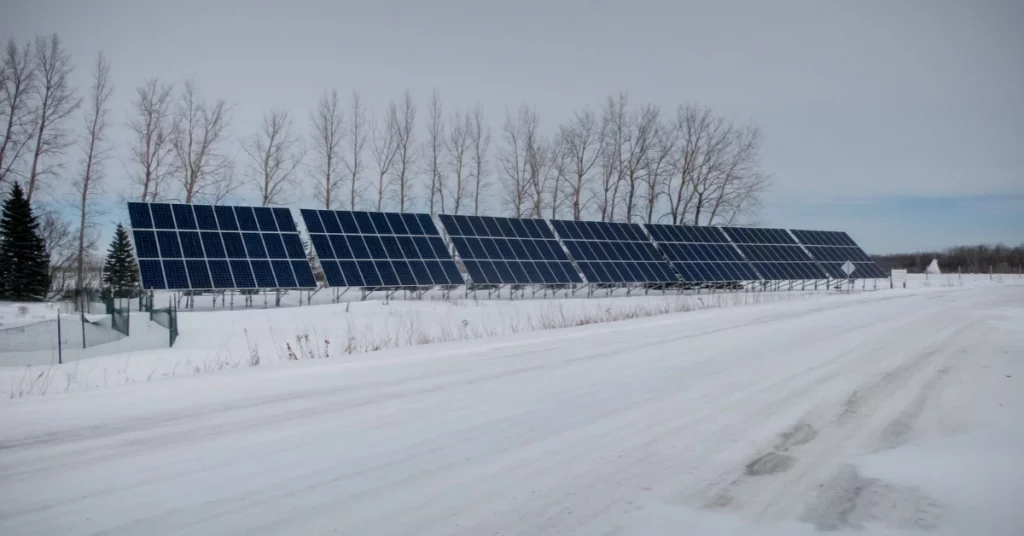
Solar panels face more than sunlight. On a snowy roof, accumulated snow can press down on the module. In exposed locations, wind can create suction and uplift. For installers, EPCs and procurement teams, a solar panel’s mechanical-load rating is an essential specification to check alongside wattage, efficiency and warranty.
If you are comparing 5400 Pa solar panels, this guide explains what the number means, why front and rear ratings differ, what U.S. codes require, and how to compare ten current Sunhub deal listings. The most important takeaway is that a 5,400 Pa test rating is not automatically a 5,400 Pa allowable site-design load.
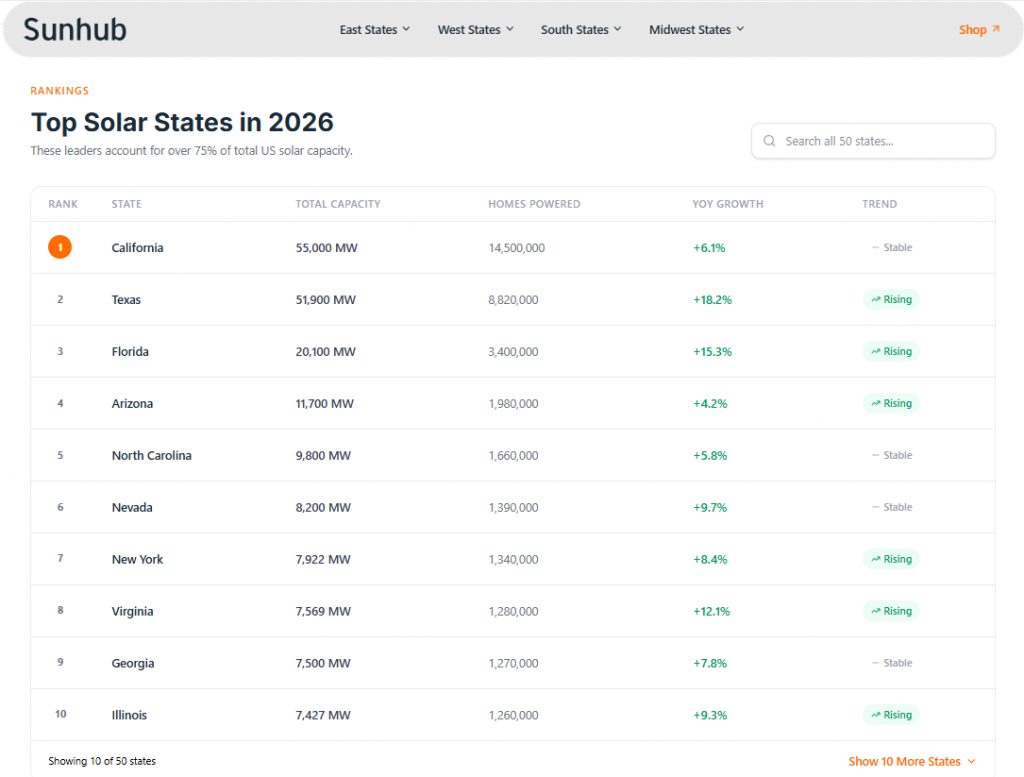
Explore U.S. Solar State Rankings
Compare solar rankings, installed capacity, growth trends, and market performance across all 50 states. Discover regional insights to support smarter procurement and expansion decisions.
Table of Contents
What does 5400 Pa mean on a solar panel?
A pascal (Pa) measures pressure. A 5,400 Pa module load value equals 5.4 kilopascals (kPa), or approximately 112.8 pounds per square foot (psf). It describes a pressure level used for mechanical-load qualification under specified conditions, not panel electrical output and not a claim that the module will survive every storm.
Datasheets may show a positive front-side load (typically associated with downward snow pressure) and a negative rear-side load (typically associated with wind uplift). For example, 5400/2400 Pa and 5400/5400 Pa are different claims. Always check which side and which mounting configuration each rating applies to.
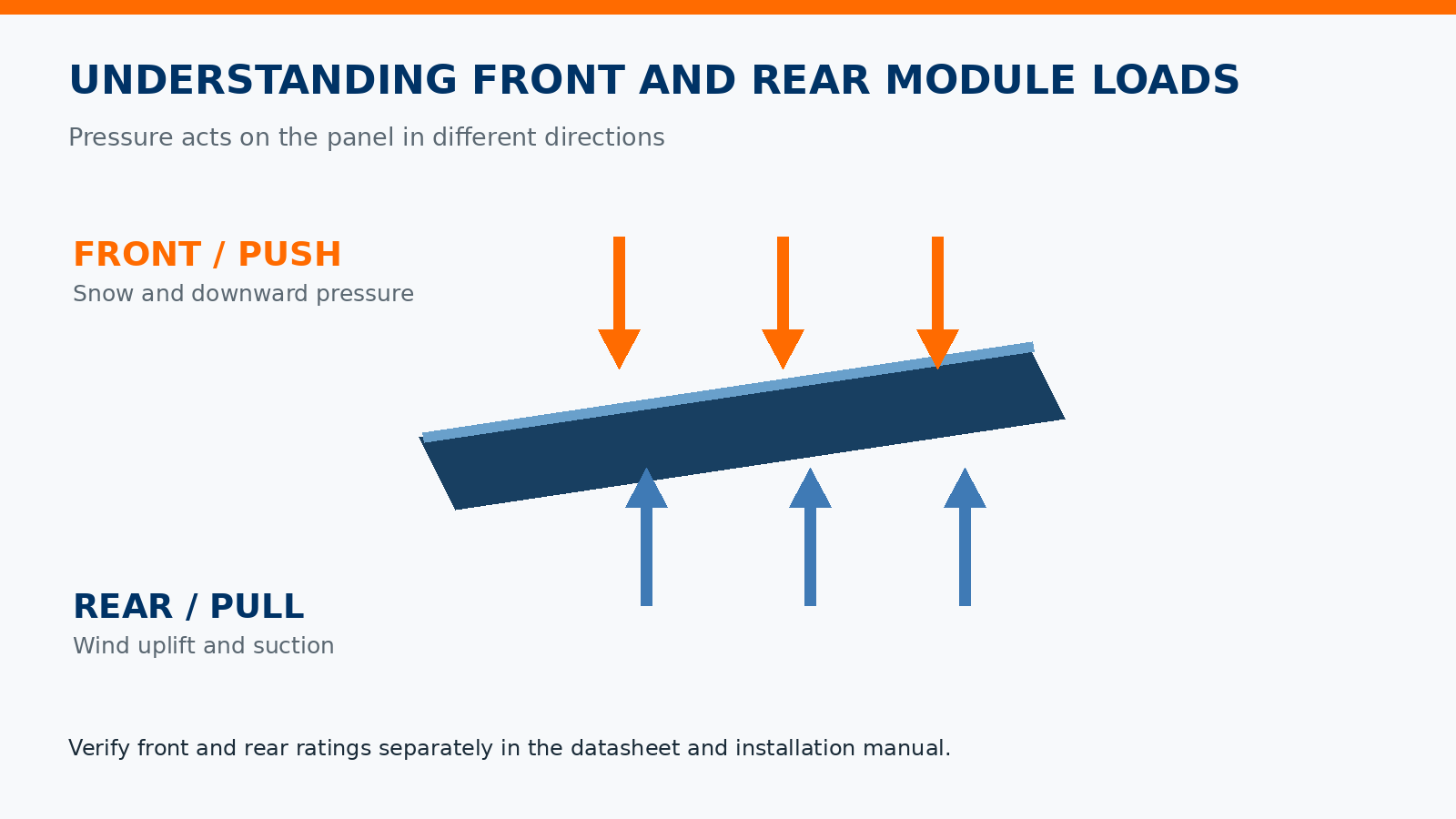
5400 Pa test load vs. design load: the difference installers must check
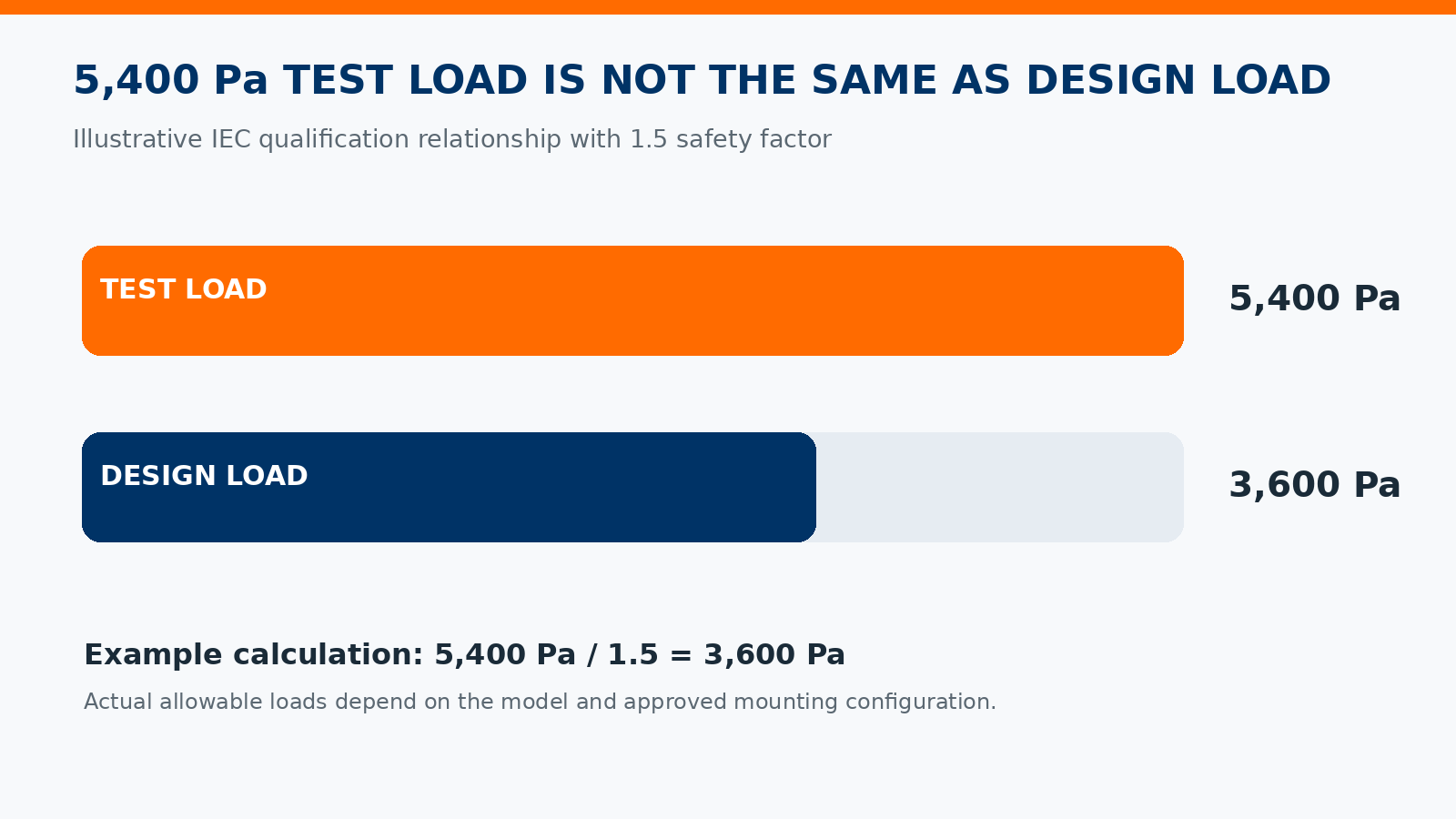
A module may be tested at 5,400 Pa but have an allowable design load of 3,600 Pa where a 1.5 safety factor applies. The relationship is: test load = design load × safety factor. In this example, 5,400 ÷ 1.5 = 3,600 Pa (about 75.2 psf). This is an illustrative calculation, not a blanket rating for every module or mounting arrangement.
Actual design values must be taken from the relevant manufacturer datasheet or installation instructions. Clamp locations, number of supports, rail orientation and approved mounting zones can change the allowable load.
Do U.S. building codes require 5400 Pa solar panels?
There is no nationwide rule requiring every solar installation in a particular state or county to use a module labeled 5,400 Pa. Instead, the engineer or qualified designer determines site-specific structural demands under the applicable adopted building code, frequently using ASCE 7 for snow and wind load calculations. Local adoption of code editions and permitting requirements varies.
For snow, ground snow load is not the same as the pressure acting on a tilted roof or module. Roof geometry, slope, drifting, exposure and installation details may influence the load. Wind evaluation likewise depends on the building, roof zones, exposure and component/attachment behavior. The U.S. Department of Energy emphasizes reviewing the manufacturer’s permitted mounting configuration and accounting for nonuniform snow accumulation.
High-snow regions and exposed high-wind locations can create demand for modules with higher mechanical-load capabilities, but a module should be specified only after site-specific calculations confirm that the whole PV assembly meets the applicable demand.
Does a 35 mm solar panel frame outperform a 30 mm frame?
Not necessarily. Frame depth is only one part of module structural design. Glass type and thickness, module dimensions, internal construction, support spacing and clamp zones affect how loads are transferred. A 30 mm-frame module may have a suitable approved load rating for a project, while a 35 mm-frame module can still be unsuitable if it is mounted outside its tested configuration.
When sourcing 5400 Pa solar panels, compare the complete manufacturer documentation rather than treating frame height as a substitute for engineering evidence.
10 Sunhub solar panel deals with 5,400 Pa wind and snow values listed
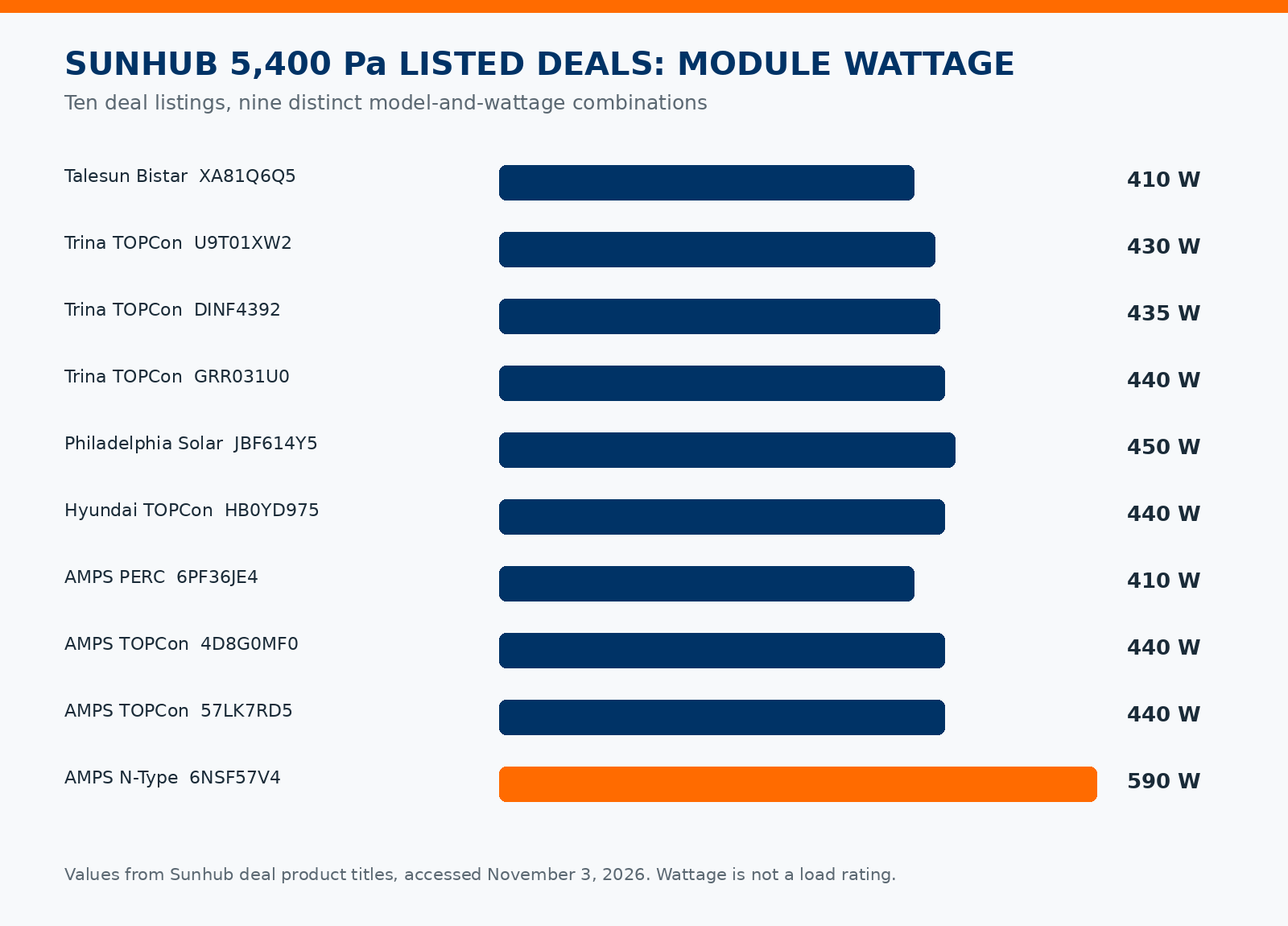
The source document’s November 3, 2026 review of Sunhub’s product listings identified a 5,400 Pa wind-load value and a 5,400 Pa snow-load value for each deal below. These are marketplace listing specifications, not independent verification that all ten have equivalent front/rear test loads or the same design-load capacity. Check the exact model’s datasheet and installation manual before making project-specific structural claims. Availability, pricing and minimum order quantities may change.
| Deal / model | Power | Deal link |
|---|---|---|
| Talesun Bistar (XA81Q6Q5) | 410 W | View deal |
| Trina TOPCon (U9T01XW2) | 430 W | View deal |
| Trina TOPCon (DINF4392) | 435 W | View deal |
| Trina TOPCon (GRR031U0) | 440 W | View deal |
| Philadelphia Solar (JBF614Y5) | 450 W | View deal |
| Hyundai TOPCon (HB0YD975) | 440 W | View deal |
| AMPS PERC (6PF36JE4) | 410 W | View deal |
| AMPS TOPCon (4D8G0MF0) | 440 W | View deal |
| AMPS TOPCon (57LK7RD5) | 440 W | View deal |
| AMPS N-Type (6NSF57V4) | 590 W | View deal |
The AMPS 440W model appears under two separate deal IDs (4D8G0MF0 and 57LK7RD5). These are ten deals, not ten necessarily different module models. The Trina 430W, 435W and 440W entries also represent variants of the same product family.
Which 5400 Pa solar panels make sense for residential and commercial projects?
For residential roofs, installers may start by considering compact 410W to 450W modules where roof layout, mounting hardware and logistics suit the project. Sunhub’s listed options include Talesun 410W, AMPS 410W, Trina 430W/435W/440W, Hyundai 440W, Philadelphia Solar 450W and AMPS 440W.
For larger commercial or ground-mounted designs, the AMPS 590W N-Type bifacial listing provides a higher-wattage sourcing option, subject to engineering and racking compatibility. Higher wattage does not itself mean higher mechanical-load tolerance.
No one module should be described as the “best” for heavy snow or wind solely on the basis of the marketplace load field. Check approved design loads, installation instructions, certification, system-level racking limits, local conditions and total installed cost.
A seven-point procurement checklist for high-load solar panels
- Obtain the exact part-number datasheet and installation manual, including revision date.
- Confirm whether the advertised value is test load or allowable design load.
- Verify both positive/front and negative/rear load ratings, including sign conventions.
- Confirm approved clamp zones, mounting orientation, number of rails and support spacing.
- Check module dimensions, weight, frame profile and compatibility with the selected racking.
- Have the project designer calculate site-specific roof snow and wind demands under the adopted code.
- Confirm current stock, shipping location, MOQ, warranties and final deal terms before ordering.
Find 5400 Pa solar panel deals on Sunhub
Sunhub connects U.S. solar installers, EPCs and equipment buyers with supplier inventory. Explore the deals above to review model details and request availability or quotes. For projects in demanding snow or wind conditions, share your required design loads and mounting constraints with the supplier or qualified engineer before purchasing.
Compare available deals and source high mechanical-load solar panels through Sunhub.
Frequently asked questions
Is 5400 Pa a snow load or a wind load?
It can refer to a stated mechanical-load test in either direction. Check the separate front/positive and rear/negative values rather than treating one number as proof of both.
How much snow is 5400 Pa?
5,400 Pa is approximately 112.8 psf of pressure. This is not a universal safe snow depth, because snow density varies and roof/module loads are affected by geometry and drifting.
Is a 5400/5400 Pa solar panel hurricane-proof?
No. A load rating alone does not prove hurricane resistance or system-level wind compliance. Roof attachment, racking, exposure, code calculations and approved mounting all matter.
Can a 5400 Pa test-load module be designed for 5400 Pa?
Not automatically. A common 1.5 test factor yields an illustrative 3,600 Pa design load from a 5,400 Pa test value. Use the manufacturer’s certified, configuration-specific allowable ratings.
Which U.S. states require 5400 Pa solar panels?
There is no blanket list of states requiring a nominal 5,400 Pa module rating. Project-specific snow and wind criteria determine the necessary assembly performance.
Sources and engineering references
Maysun Solar, 5400 Pa snow load and frame comparison: Source
U.S. Department of Energy, PV winter-weather resilience: Source
ASCE, ASCE/SEI 7-22 standard overview: Source