
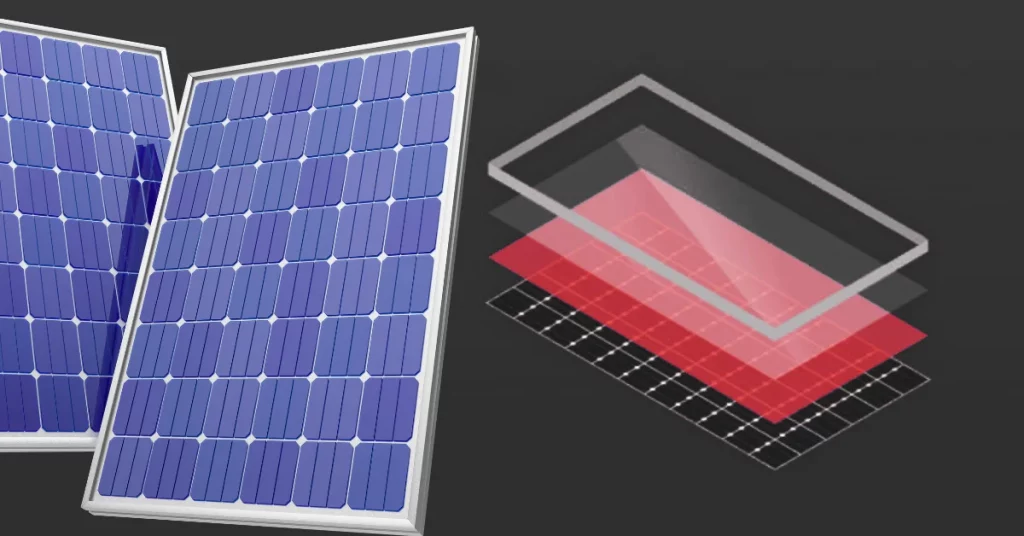
When homeowners or businesses invest in solar energy, they want a system that will perform steadily for decades. Even a small yearly drop in performance can add up over time, affecting total energy output, financial returns, and system longevity. This gradual decline in power production is known as solar panel degradation.
Degradation happens naturally as solar panels age. Factors like sunlight, temperature, and humidity slowly affect the materials inside a module. The good news is that modern solar technology is more reliable than ever. High quality modules degrade very slowly, and real research helps us understand exactly what to expect.
Below is a breakdown of what trusted sources such as the National Renewable Energy Laboratory (NREL), the National Institute of Standards and Technology (NIST), and peer reviewed journals report about degradation as of November 2025.
What real world data says about degradation rates
Findings from NREL’s PV Lifetime Project
NREL’s PV Lifetime Project is one of the most respected long term studies on module reliability. It monitors panels from multiple manufacturers that have been deployed in real operating conditions.
According to the 2024 PV Lifetime Annual Report, modules from companies like Jinko, Trina, Q Cells, LG, and LONGi show median annual degradation rates of about 0.3 percent to 0.6 percent, with most of the power loss occurring in the first year. Several high performing modules have degradation rates closer to 0.25 percent per year after the early stabilization period.
This means that after the initial settling, many modern crystalline silicon modules lose less than one percent of performance per year. This aligns with previous long term research and confirms that panels today are more durable than older generations.
Long term performance trends from NIST
NIST’s Special Publication 1203 analyzed a wide range of field data on crystalline silicon modules. Their findings are similar to NREL’s conclusions.
- The median degradation rate across studies is about 0.5 percent per year.
- The average degradation rate across all collected data is 0.8 percent per year.
- First year degradation can be higher. Some systems experience 1.5 percent to 4.7 percent loss in the first year, but after that the yearly loss typically decreases significantly.
This combination of higher early loss followed by a slow decline is a well known pattern in PV system aging.
How climate affects degradation
Degradation does not happen at the same rate everywhere. Heat, humidity, and sunlight intensity all play major roles.
Example from tropical climates
A long term outdoor exposure study in Singapore evaluated crystalline silicon modules over several years. After correcting for temperature, the panels showed annual degradation rates between 0.03 percent and 0.47 percent per year. This is extremely low and demonstrates that high quality modules can perform well even in warm tropical climates.
Findings from peer reviewed research
A review published in the MDPI Energy journal notes that harsh climates tend to accelerate aging. For example:
- Hot and arid regions have degradation rates around 1.2 percent per year.
- Mild and temperate climates show much slower degradation.
Environmental stressors affect both the solar cells and the materials used to encapsulate and protect them.
New concerns with n type solar technologies
While traditional p type crystalline silicon modules are well studied, newer n type technologies such as TOPCon, heterojunction, and n PERT are now gaining market share. Recent research shows that these modules may be more sensitive to a degradation process called UV induced degradation, also known as UVID.

NREL’s 2025 findings
In 2025, NREL researchers analyzed an operational 3 MW rooftop system that used n PERT modules. They discovered real world degradation rates of about 2.4 percent per year at that site. This is significantly higher than the typical crystalline silicon degradation rate.
The research identified two main sources of the loss:
- Reduced performance in the blue wavelengths of sunlight.
- Increased electrical resistance within the cell, especially after exposure to both UV light and damp heat.
Laboratory testing showed that when unfielded modules were exposed to UV levels far beyond current IEC certification requirements, they experienced measurable performance loss. When UV exposure was followed by damp heat, the damage progressed even further.
Implications for the industry
These findings suggest that current certification tests such as IEC 61215 2 may not sufficiently account for UV risks in some n type module designs. Additional research and updated testing protocols may be needed as these technologies become more common.
It is also important to note that not all n type modules are affected in the same way. Some manufacturers use encapsulants and cell designs that reduce UV exposure inside the module. Still, the industry is paying close attention to this topic because n type modules are expected to dominate the solar market in the coming years.
What causes solar modules to degrade
Solar panel degradation is influenced by several internal and external factors. The most widely documented mechanisms include:
Light induced degradation
Some types of silicon cells experience chemical changes when exposed to sunlight, especially during early operation. Light and elevated temperature induced degradation is the more intense version of this effect.
UV induced degradation
Recent research shows that UV exposure can cause chemical and electrical changes inside the cells and gridlines of certain module types. This is especially relevant for some n type designs.
Thermal cycling
Daily heating and cooling causes expansion and contraction. Over time this creates stress on solder joints, ribbons, frames, and encapsulant layers and can lead to microcracks.
Encapsulant and backsheet aging
Materials such as EVA encapsulant slowly discolor or harden over time. Backsheets can become brittle, allowing moisture or oxygen to enter.
Environmental stress
High heat, humidity, rain, snow, dust, and UV all contribute to performance decline. Systems in extreme climates age faster than those in moderate regions.
How solar owners can minimize degradation
Even though degradation is unavoidable, there are several practical steps that help protect system performance:
- Choose high quality modules from reputable manufacturers. Look for manufacturers with proven long term field data, not just laboratory claims.
- Monitor performance regularly. Tools such as IV curve tracing or electroluminescence imaging can detect hidden issues early.
- Match the module to the climate. For hot or humid environments, choose modules tested for high stress resistance.
- Review warranty terms carefully. Pay attention to performance guarantees and degradation limits.
- Stay updated on new research. This is especially important if your system uses n type modules or next generation cell technologies.
Final thoughts
Solar panels are durable, long lasting, and generally degrade very slowly. According to NREL’s most recent field data, many modern crystalline silicon panels lose only 0.3 percent to 0.6 percent per year after the first year of stabilization. Long term data from NIST shows similar results, with a median of 0.5 percent per year.
At the same time, new research shows that certain n type technologies may degrade faster under UV exposure. Degradation rates of around 2.4 percent per year have been observed in real world installations using n PERT modules. This does not mean these modules are unreliable, but it does mean that testing standards and material choices are evolving as the industry learns more.
The most important takeaway is that understanding degradation helps solar system owners make better decisions. With high quality modules, proper maintenance, and awareness of climate and technology factors, a solar system can continue performing effectively for decades.