
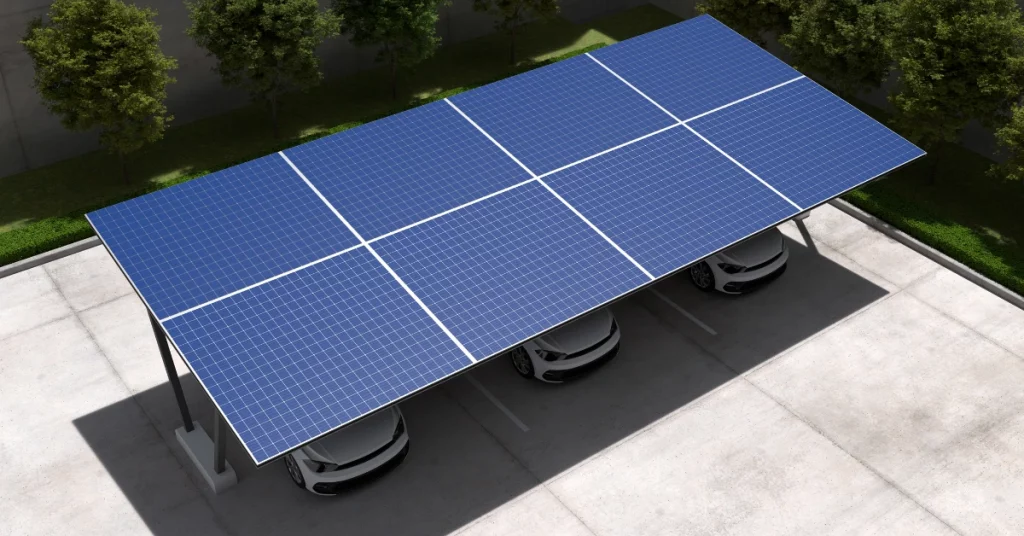
In 2025, commercial solar carport structures serve dual purposes: they provide shaded parking and generate clean, renewable electricity that powers buildings, EV charging, lighting, and more. While the hardware, solar panels, supports, and wiring, is essential, what really keeps a solar carport performing efficiently over time is the system behind it: solar monitoring systems.
Solar monitoring systems act like a “dashboard” for your solar energy setup, giving business owners, facility managers, and technicians real-time insight into how well their system is working, detecting issues early, and helping maximize energy production and long-term return on investment. In this blog we’ll explain what solar monitoring systems are, how they work, why they matter specifically for commercial solar carports, and how to plan for effective performance tracking in 2025 and beyond.
What solar monitoring systems are
At its core, a solar monitoring system is a combination of sensors, data communication, and software that collects and displays information about a photovoltaic (PV) system’s performance. These systems connect to solar panels, inverters, meters, and sometimes battery storage to measure energy production, system health, and usage patterns.
Instead of guessing whether your solar setup is operating as expected, a monitoring system gives you precise data on how much electricity your carport array is generating at any moment and over time. This lets you understand not just raw output, but efficiency, anomalies, and trends that impact cost savings and system longevity.
How solar monitoring systems work
Solar monitoring systems collect information from the solar installation and transmit it to a central platform, either on-site or, more commonly today, cloud-based. Here’s how the process typically works:
1. Data collection: Sensors and meters connected to panels, inverters, and other key components record metrics such as voltage, current, total energy produced, and often environmental conditions like sunlight intensity and temperature.
2. Data transmission: This information is sent to a monitoring platform via communication tools such as Wi-Fi, cellular networks, Ethernet, or dedicated data links.
3. Data analysis and visualization: The monitoring platform organizes the data into dashboards and reports that show real-time and historical performance. Users can view graphs, trends, anomalies, and alerts from a web portal or mobile app.
Through this continuous loop of data collection, transmission, and analysis, a solar monitoring system turns raw signals into useful insights that drive maintenance decisions, performance optimization, and cost savings.
Why monitoring matters for commercial solar carports
Commercial solar carport structures are substantial investments that often produce thousands or even millions of kilowatt-hours of electricity each year. In such productions, even small underperformance issues, like panels shaded more than expected, wiring faults, or inverter inefficiencies, can translate into significant energy and revenue losses.
Here’s why solar monitoring is especially critical for commercial solar carports:
Improves energy efficiency and cost savings
Knowing exactly how much energy your carport system is producing and when it’s most productive helps you optimize energy use. For example, businesses can align high-energy operations, like charging electric vehicles or running HVAC systems, with periods of peak solar production to reduce grid usage and utility costs.
Real-time monitoring also identifies underperforming segments of the array so they can be addressed quickly, preventing energy loss.
Detects issues early
One of the biggest advantages of solar monitoring systems is the ability to spot inefficiencies and faults quickly. If a group of panels is shaded, output drops, or an inverter stops producing optimally, alerts can notify operators immediately. Timely detection avoids prolonged energy losses and costly repairs later.
Supports preventive maintenance
Monitoring systems don’t just show you current performance; they help identify patterns over time and signal when maintenance is due. Trend analysis can guide panel cleaning, shading mitigation, or equipment replacement before failures occur.
Provides detailed performance reporting
Commercial solar initiatives often involve stakeholders, investors, or regulatory reporting. Monitoring systems compile historical data, compare predicted versus actual output, and generate reports that help demonstrate performance, comply with warranty requirements, and justify future investments.
Enhances integration with energy management
For businesses using energy storage or EV charging infrastructure under a solar carport, monitoring systems help integrate those capabilities by showing when excess solar power is available and when to draw from batteries or the grid. This type of intelligent energy management maximizes value and resilience.

Key features to look for in a solar monitoring system
To fully benefit from monitoring, commercial solar carports should be paired with systems that offer robust features. Here’s what to consider:
Real-time data and alerts
Systems should provide instantaneous access to performance metrics and send alerts for faults or drops in production. This enables rapid response and minimizes downtime.
Advanced analytics and historical trends
Beyond instantaneous readings, look for tools that analyze data over hours, days, months, and years. Historical trends help identify recurring patterns, for example seasonal shading, and support strategic decisions.
Compatibility with energy management systems
Modern systems should integrate with energy storage, EV chargers, and building energy management platforms so that production and consumption insights can be used for smart scheduling.
Remote access and mobile apps
Cloud-based platforms and mobile apps allow stakeholders to check system health, view alerts, and share reports from anywhere.
Scalability
Whether you’re managing one carport or a portfolio of installations across multiple sites, ensure that the system can scale with your needs. Scalable monitoring platforms can consolidate data from different locations.
Integration with commercial solar O&M plans
Solar monitoring systems are a cornerstone of broader Solar operations and maintenance (O&M) strategies. When monitoring data is combined with scheduled maintenance and corrective action plans, overall system performance improves significantly. Real-time visibility lets technicians focus on priority issues, and data logs help identify recurring problems before they escalate.
For commercial solar carports, which may have complex wiring, larger arrays, and integrated storage or EV chargers, the synergy between monitoring and O&M is particularly powerful. Alerts from the monitoring platform can trigger O&M tasks such as panel inspection, inverter service, or electrical testing, improving uptime and energy production.
Benefits beyond energy performance
While performance and cost savings are primary drivers for monitoring, there are additional advantages:
Support for sustainability goals
Solar monitoring systems help businesses verify their contribution to sustainability and carbon reduction goals. Visualizing real-time clean energy generation makes it easier to report progress toward ESG (environmental, social, governance) targets.
Improved stakeholder transparency
For organizations where solar projects are part of investor portfolios or corporate sustainability initiatives, monitoring dashboards provide transparent evidence of performance, helping build trust among stakeholders.
Educational and operational value
Access to detailed energy data also helps facility managers understand consumption patterns, plan energy usage more effectively, and educate employees or tenants about renewable energy benefits.
Common challenges and solutions
Even the best monitoring systems must be implemented thoughtfully. Some challenges include:
Data overload
Businesses without clear goals can be overwhelmed by data. Choose systems that offer customizable dashboards and focus alerts only on actionable issues to avoid unnecessary noise.
Connectivity issues
Reliable data transmission is key. Systems that support multiple communication options, Wi-Fi, cellular, and wired connections, help ensure data flows uninterrupted.
Integration with legacy systems
Older solar arrays may not have built-in monitoring capabilities. In such cases, retrofitting sensors or using meter-based monitoring solutions can extend visibility without full hardware replacement.
Solar monitoring in the future
As solar technology evolves, monitoring systems are becoming smarter. Advanced analytics, artificial intelligence (AI), and machine learning models are being integrated into monitoring platforms to detect subtle signs of component degradation, predict failures, and optimize performance without human intervention. These capabilities will be especially valuable for large commercial solar carport installations and fleets of sites managed by third-party operators. (Industry trend based on evolving analytics tech)
Concluding thoughts
Solar monitoring systems are much more than optional add-ons for commercial solar carport structures. They are essential tools that turn raw solar hardware into a reliable, high-performing investment. By delivering real-time data, early fault detection, performance analytics, and integration with broader energy management systems, monitoring platforms help businesses protect energy production, reduce costs, meet sustainability goals, and scale solar across multiple sites.
Especially in 2025 and beyond, when energy resilience, sustainability, and operational efficiency matter more than ever, a well-chosen solar monitoring system is a powerful asset for any organization deploying commercial solar carports.