
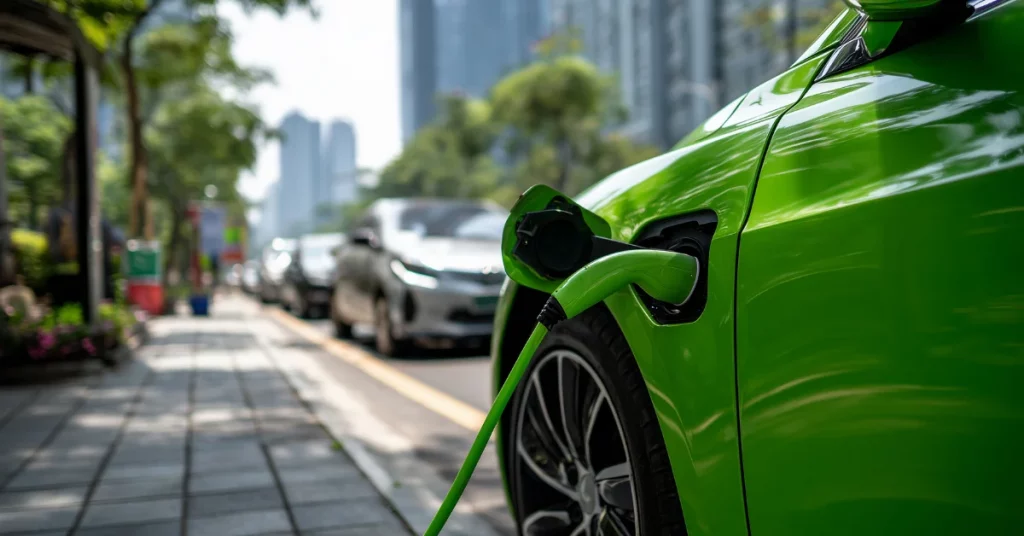
Electric vehicles (EVs) are rapidly reshaping the global transportation landscape. With consumers demanding longer range, faster charging, and greater reliability, the battery has become the heart of every EV. Yet, even as more EVs hit the road, one crucial element behind the scenes does not get enough attention: EV battery testing. This essential process ensures that every battery installed in an electric car, truck, or bus is safe, durable, and efficient throughout its service life.
As of 2026, EVs are mainstream across many markets, and battery testing has moved from a specialized lab task to a strategic priority for manufacturers, regulators, and consumers alike. In this blog we’ll explain what EV battery testing is, why it is critically important, how it works, and what 2025’s trends mean for the next decade of e-mobility.
What is EV battery testing
EV battery testing refers to a set of laboratory and field procedures used to evaluate the performance, safety, durability, and compliance of batteries used in electric vehicles. These tests assess how a battery performs across real-world conditions and standards. Testing is conducted at multiple stages of development and deployment, from initial battery cell design through production and even post-market quality assurance.
Since EV batteries are complex systems with hundreds or thousands of individual cells that must work together reliably under varying temperatures, driving styles, and charging conditions, battery testing is necessary to reveal hidden weaknesses, predict lifespan, and guard against failures that could lead to performance loss or safety issues.
Why battery testing matters more than ever
Electric vehicle batteries are unlike traditional car components. They are energy storage systems made from multiple chemical cells, and they operate under stress from temperature swings, fast charging, and repeated charge/discharge cycles. Without thorough testing:
- Batteries may degrade faster than expected, reducing driving range and value.
- Safety issues could go undetected, increasing the risk of thermal events such as overheating or fire.
- Performance metrics advertised by manufacturers might not match real-world performance.
EV battery testing helps uncover issues early. It provides confidence that batteries will meet safety standards, perform reliably, and last as long as expected. For automakers, testing supports product credibility and reduces liability. For consumers, it delivers better trust in EV performance over time.



Stages of EV battery testing
Testing is an ongoing process throughout a battery’s lifecycle. The main stages include:
1. Cell-level testing
The smallest unit of an EV battery is the cell. At this stage, engineers evaluate electrochemical performance, capacity, charge efficiency, and degradation under different conditions. Testing at the cell level helps rationalize materials, chemistry, and design before cells are assembled into larger modules or packs.
2. Module and pack testing
Battery modules and packs are larger assemblies used in actual vehicles. These tests simulate real-world load conditions to evaluate electrical behavior under stress. Thrilling testing forces might include rapid acceleration, uneven terrain, or heavy accessory use that stresses the battery.
3. Environmental and abuse testing
Batteries must remain safe under extreme conditions. Environmental testing procedures subject batteries to heat, cold, humidity, vibration, shock, and other scenarios that may occur in annual use. Abuse testing pushes the packs beyond safe limits, for example, simulating fire, impact, or crushing forces, to confirm protective measures work effectively.
4. Cycle life testing
This testing measures how long a battery retains its capacity after repeated charge and discharge cycles, which reflects real-world usage. Batteries naturally lose capacity over time, but cycle life testing quantifies how fast that happens and helps manufacturers improve designs.
5. Electrical and impedance testing
This type of test measures internal resistance and efficiency during electrical load. These metrics help engineers understand how the battery will perform under typical driving conditions and how much energy is lost in internal resistance.
Advanced techniques, including AI-assisted analytics, cloud-based monitoring, and digital twin simulations, are increasingly used to speed up testing and provide predictive insights about battery behavior under future scenarios.
Safety and real-world reliability
The stakes for EV battery safety are high. While modern lithium-ion batteries are engineered to be safe, under extreme abuse or poor design they can undergo thermal runaway, a rapid increase in temperature that can damage the vehicle or lead to fire. Rigorous safety testing helps prevent unsafe battery behavior in everyday use and edge cases.
Temperature testing, for example, reveals how batteries behave during very hot or very cold conditions (thermal stability). If a battery cannot handle thermal shock, it may age prematurely or fail safety certifications required for sale.
Battery testing also helps consumers understand how accurately range claims reflect real-world conditions. Independent programs such as those run by automobile associations globally have shown that many EV models deliver less range in actual driving than advertised under ideal test conditions.
Market growth and industry investment
The global market for EV battery testing is projected to grow substantially over the coming decade, illustrating its increasing importance in the e-mobility ecosystem. As of 2025, market research estimates this sector at about $4 billion and anticipates it reaching $9.4 billion by 2030, growing at a compound annual growth rate (CAGR) of around 18.4 percent.
Several forces drive this growth: rising EV adoption worldwide, stringent regulatory requirements in regions such as North America, Europe, and Asia, and continuous innovation in battery chemistry, from traditional lithium-ion cells to emerging solid-state technologies.
Regulatory frameworks from agencies such as the U.S. National Highway Traffic Safety Administration (NHTSA), United Nations Economic Commission for Europe (UNECE), and ISO standards organizations require detailed testing and documentation for crash safety, thermal safety, and durability. Compliance with these standards is essential for automakers to enter global markets. (blog.bccresearch.com)
Key testing technologies and trends
The range of testing technologies continues to expand. In addition to traditional climatic and electrical test chambers, advanced methods now include digital twin simulations and cloud-connected test benches that provide real-time feedback on performance. These tools help simulate thousands of real-world scenarios without the time and expense of physical testing alone.
AI and machine learning are also increasingly leveraged to analyze large datasets from testing and real-world usage. These advanced analytics can forecast battery degradation, anticipate failures before they occur, and help manufacturers refine designs faster than ever before.
Another emerging trend is real-time battery testing through operational data. For example, some EV manufacturers are experimenting with AI insights derived from large fleets that deliver instant feedback on battery health during normal use. This data enriches traditional lab testing by incorporating real customer driving behavior and environmental factors.
Who benefits from EV battery testing
Battery testing benefits a wide range of stakeholders:
- Automakers use testing data to refine designs, improve reliability, and ensure regulatory compliance.
- Battery manufacturers rely on testing throughout production to maintain quality control and optimize cell chemistry.
- Consumers gain confidence in EV performance and safety, reducing anxiety about range and reliability.
- Regulators establish safety and performance thresholds based on rigorous testing protocols accepted worldwide.
- Third-party labs and testing firms contribute independent verification and certification, which enhances market trust.
Challenges in battery testing
Despite its importance, EV battery testing faces challenges. High-end testing infrastructure, such as climatic chambers, battery cyclers, and abuse test rigs, requires significant capital investment, which can be prohibitive for startups and smaller companies.
Testing is also complex because battery technology is rapidly evolving. New chemistries, designs, and formats demand frequent updates to testing protocols and equipment, a continuous investment for testing labs and manufacturers alike.
Another challenge is workforce expertise. Skilled technicians, data analysts, and engineers are essential to operate sophisticated testing equipment and interpret results effectively. As EV adoption accelerates, the demand for trained professionals in battery testing is growing.
The future of EV battery testing
Looking forward, EV battery testing will remain a cornerstone of the e-mobility revolution. As faster charging, higher energy densities, and next-generation chemistries such as solid-state technologies move closer to commercialization, testing standards will evolve to keep pace with innovation.
Battery testing may also play a bigger role in second-life applications where retired EV batteries are reused for grid storage or other roles. Understanding long-term degradation and accurate state-of-health metrics will be key to unlocking sustainable battery reuse markets in the near future.
Ultimately, battery testing ensures that the transition to electric transportation continues with reliability, safety, and confidence, making it one of the most important, albeit less visible, parts of the EV ecosystem.
Conclusion
Electric vehicles are transforming how we think about transportation and energy, but the magic happens not just on the road, it begins with batteries. EV battery testing is critical in ensuring that batteries are safe, reliable, durable, and optimized for real-world use. From cell design to post-market quality assurance, rigorous testing helps automakers deliver vehicles that meet driver expectations and regulatory standards.
With the global EV battery testing market growing rapidly and testing technologies advancing continuously, this field will remain vital as we push toward broader EV adoption, faster charging, and more environmentally sustainable mobility options.
Sources:
EV battery testing importance and market growth. (blog.bccresearch.com)
Thermal testing and temperature challenges. (lneya.com)
Market restraints and technology trends. (MarketsandMarkets)