
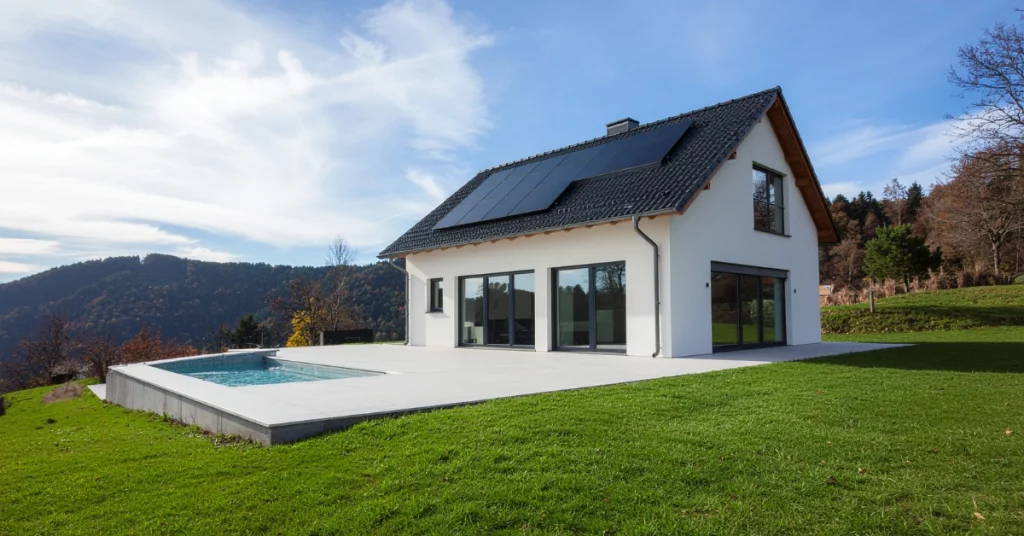
Nothing says summer like a refreshing swim. But if the water in your pool is chilly, you might find yourself heading inside. Heating a pool with gas or electricity can be expensive and energy-intensive. That’s where solar pool heating comes in, an effective, environmentally friendly way to use the sun’s free energy to warm your pool water and extend your swim season. In this blog, we’ll explore what solar pool heating is, how it works, its benefits, and key things to consider before installing a system.
What solar pool heating means
Solar pool heating uses the sun’s thermal energy to raise the temperature of your pool water. Instead of burning fuel or relying on grid electricity, solar pool heaters capture sunlight and transfer that heat directly to the pool. As long as the sun is shining, you’re using a renewable, abundant source of energy to keep your water comfortable without ongoing fuel costs. It is one of the most cost-effective uses of solar thermal technology in residential applications because pool water does not need to reach extremely high temperatures, usually just a modest increase above ambient water temperature.
How solar pool heating systems work
Solar pool heating systems may sound complex, but the physical principle is straightforward: sunlight is converted into heat, and that heat warms the pool water as it circulates through the system. Here’s a step-by-step overview:
Solar collectors – These are the heart of the system and are usually mounted on a roof, ground rack, or other sunny location. Water flows through tubes or absorber plates in these collectors where it picks up heat from the sun.
Pump and plumbing – Pool water is circulated by your existing pool pump and directed through the solar collectors before returning to the pool. In some systems, a dedicated pump or flow control valve ensures water only travels through the collectors when it will be heated effectively.
Control system – A controller with temperature sensors measures collector and pool temperatures. When the collector is hotter than the pool, it opens a valve to send water through the collectors to heat it.
return to pool – Heated water is returned to the pool, gradually raising the overall temperature as the circulation continues. Each pass through the collector can raise the water temperature by several degrees.
Since solar pool systems heat water directly, there’s no need for complicated heat engines or energy conversion equipment, making them simple and reliable.
Why solar pool heating makes sense
Solar pool heating is attractive for several reasons. It addresses both financial and environmental concerns while enhancing the experience of owning a pool.
Dramatic cost savings
Traditional pool heating with gas or electric heaters can be expensive. Solar pool heating systems significantly reduce or even eliminate these costs because solar energy is free once the system is installed. Most systems pay for themselves through reduced energy bills within a few years.
Extended swimming season
Many pool owners use their pools only a few months a year because water gets too cool for comfortable swimming in spring or fall. Solar pool heating systems can extend this season by several months. In warmer climates, some owners enjoy near year-round swimming.
Environmentally friendly
Because they rely on sunlight, solar pool heaters produce no greenhouse gas emissions during operation. This reduces reliance on fossil fuels and supports cleaner energy use.
Low maintenance and long lifespan
Solar thermal systems are simple, with few moving parts. Collectors are generally durable and designed to last 15–20 years or more with basic maintenance. Regularly clearing debris and checking connections keeps performance high without significant ongoing costs.
Quiet and safe operation
Unlike gas heaters or heat pumps, solar pool heating systems operate silently and without combustion, fuel storage, or high-pressure components. This makes them safe and unobtrusive to use.
Types of solar pool collectors
Not all solar pool heating systems are identical. The choice of collector type depends on climate, budget, and pool usage patterns:
Unglazed collectors
These are often high-density plastic or rubber panels without glass covers. They are cost-effective and work well in climates where freezing is not a concern. Many seasonal pools use unglazed systems thanks to their affordability and effectiveness in milder conditions.
Glazed collectors
Glazed collectors have a glass cover and typically include copper absorber plates. They are more durable and capable of operating in colder climates because the glass traps heat more effectively. These systems are more expensive but can provide more consistent year-round performance in areas with cooler weather.
Some designs combine solar heating with domestic hot water or other thermal applications, enhancing overall system value.

Sizing and placement considerations
Proper system sizing and placement are essential for performance:
Appropriate collector area
Solar pool systems are sized based on the pool’s surface area, average sunlight, and desired temperature increase. Typically, the collector area should equal 50% to 100% of the pool’s surface for effective heating. Cooler or cloudier climates generally require larger systems.
Orientation and tilt
For best results, collectors should face due south in the northern hemisphere and due north in the southern hemisphere. A slight east or west variation is acceptable, but optimal tilt and orientation maximize sunlight capture throughout the day.
unobstructed sunlight
Shading from trees, buildings, or other structures reduces heating efficiency. Solar pool heating systems work best where collectors receive direct sunlight from mid-morning to late afternoon.
How much heat can you expect
Solar pool heating systems are designed for moderate heating, not boiling water. Typically, a well-sized system can raise pool water by 8–15°F (about 4–8°C) over ambient temperatures on sunny days. This range keeps swimming water comfortable even when outdoor air temperatures are cooler.
In areas with abundant sunshine, this temperature boost often aligns with extended swim seasons and greater comfort throughout spring and fall. Covering the pool when not in use also helps retain heat and further improves overall efficiency.
Installation and costs
Installing a solar pool heating system generally involves mounting collectors, connecting the plumbing and control systems, and ensuring proper integration with your pool’s existing pump and filter. In many cases, the work can be performed by trained solar installers or experienced DIY homeowners with plumbing experience.
Costs vary based on system size, collector type, and site conditions. A typical residential system might range from a few thousand dollars, with payback periods often between 1–7 years thanks to ongoing savings on energy costs.
Factors that affect performance
While solar pool heating is effective, several factors influence how well it performs:
Climate and weather
Solar systems perform best under direct sunlight. In climates with frequent cloud cover or short daylight hours, heating may be slower or less dramatic. Even so, properly sized systems still provide meaningful warmth most of the year.
Seasonal variation
Solar heating is generally most effective in spring, summer, and fall. Some systems may struggle in deep winter, especially in northern climates. In these cases, a hybrid system that combines solar with supplemental heating may be considered.
Pool covers
A pool cover dramatically improves heat retention by reducing evaporation, which is one of the biggest ways pools lose warmth overnight. Using a cover with your solar system enhances performance and reduces heat loss.
Concluding thoughts
Solar pool heating is a practical and cost-effective way to harness renewable energy for a more enjoyable swimming experience. It saves money on utility bills, extends your swimming season, supports environmental goals, and provides a reliable form of thermal energy without the noise and emissions of gas or electric heaters.
Whether you’re considering your first solar pool installation or upgrading an older system, understanding how solar thermal energy works to heat water, and what it takes to design an efficient system, will help you make the most of the sun’s free power for years to come.
Sources:
Solar pool heating principles and components overview. (iea-shc.org)
Department of Energy explanation of solar pool heating system operation. (The Department of Energy’s Energy.gov)
Benefits of solar pool heating, including cost savings and environmental impact. (Ablison)
Long-term benefits of solar heating and installation considerations. (EnergySage)
Efficiency and temperature effects of solar pool heating systems. (SolarTech)