
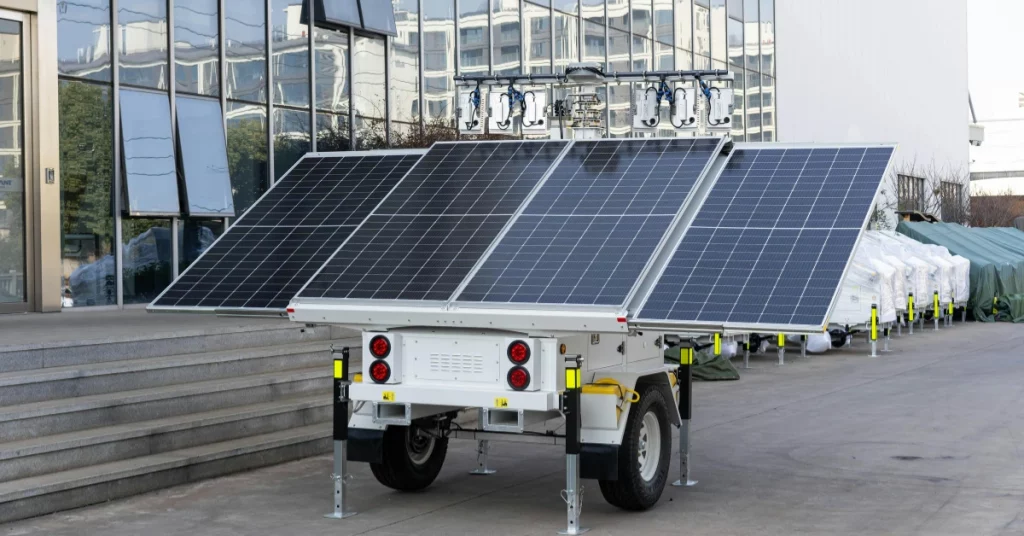
If you live in a mobile home or travel trailer, you’ve likely thought about how to power your appliances, lights, and electronics without constantly worrying about utility bills or unreliable grid power. In recent years, solar energy has emerged as a practical, affordable option for mobile homeowners. Solar panels for mobile homes harness the sun’s energy to generate electricity on site, offering lower energy costs, increased independence, and reduced environmental impact. Whether you live in your mobile home full time or use it seasonally, solar power can be tailored to meet your needs.
In this article, we’ll explain how solar systems work on mobile homes, the benefits and challenges, how to choose the right panels, and what system components you’ll need in 2026 to build a reliable setup that matches your lifestyle.
Why mobile homes are well-suited to solar power
Mobile homes, also called manufactured homes, are often ideal candidates for solar installation. Most mobile homes have flat or gently sloped roofs that make panel mounting straightforward. They also tend to have lower overall energy consumption than large site-built homes, meaning a modest array of solar panels can generate a significant portion of the electricity needed.
According to energy research projections, renewable energy, including solar, is expected to become the leading source of electricity in the U.S. by 2050. Mobile homeowners stand to benefit from this transition just as much as owners of traditional homes.
The key benefits of installing solar panels on a mobile home
Solar panels can transform how a mobile home gets its electricity. Here are the major benefits you can expect:
Reduce or eliminate utility bills
One of the most compelling reasons mobile homeowners choose solar is the potential to cut monthly electricity costs. Traditional grid-tied systems can lead to high utility bills, especially in areas with expensive electricity rates. A solar installation generates your own power, reducing or even eliminating the need to buy electricity from the utility. Once your system pays for itself through savings, that electricity is essentially free.
Energy independence and resilience
Many mobile homes are in rural or off-grid locations where utility service may be unreliable or unavailable. Solar panels paired with battery storage let you produce and store your own electricity. This creates energy independence, meaning you don’t have to depend on a utility company and are less vulnerable to outages or price spikes in energy costs.
Environmental benefits
Solar power is a clean and renewable energy source. Electricity generation from fossil fuels contributes a significant portion of greenhouse gas emissions worldwide. By generating your own solar power, you help reduce your carbon footprint and reliance on fossil fuels. The broader adoption of solar technologies contributes to climate change mitigation and a cleaner environment.
Increased property value and appeal
Solar installations can also enhance the value of your property. Energy-producing homes are often seen as more valuable because of lower operating costs and environmental appeal. Mobile homes with solar may attract higher resale interest or simply deliver long-term savings that make ownership more attractive.
Challenges to consider before installing solar
Solar systems deliver clear advantages, but there are some challenges mobile homeowners should know:
Upfront cost
Quality solar systems require an initial investment for panels, batteries, controllers, and installation. While the long-term savings are substantial, the upfront expense can be a barrier. Many people offset this through financing, tax credits, or incentives where available.
Space and weight constraints
Mobile homes have limited roof space, and not all roofs are equally suited to mounting heavy rigid panels. Solutions like flexible panels or portable ground-mounted arrays can help, but you must plan panel placement carefully to maximize sun exposure and minimize structural stress. (EcoRoof Systems)
Energy generation limits
Solar panels generate power only when sunlight is available. Overcast weather, shading from trees, and winter months can reduce energy production. Battery storage helps manage this variability by storing excess power for use at night or cloudy days, but it adds to system cost and complexity.
How solar panels work on a mobile home
Solar panels, also known as photovoltaic (PV) modules, convert sunlight into electricity. Each panel consists of cells made from materials like silicon that generate a small electric current when exposed to light. These panels are mounted where they receive direct sunlight for most of the day, commonly on the roof or on nearby mounts.
The electricity produced by solar panels is direct current (DC). Because most mobile home appliances and electronics run on alternating current (AC), the DC must be converted by an inverter before it can power devices or feed into a storage battery. A solar charge controller regulates how solar energy is stored, preventing overcharging and protecting batteries from damage.
Calculating your mobile home’s energy needs
Before choosing a system, it’s essential to understand your mobile home’s energy consumption. Energy use is measured in kilowatt-hours (kWh), which reflects how much electricity appliances use over time. To estimate needs:
- Review utility bills or estimate daily usage if off-grid.
- List all significant appliances and devices, noting how many hours per day each runs.
- Convert volts and amps to watts using the equation: volts × amps = watts.
- Add running wattage for your typical daily load and consider starting watts for devices with motors.
By calculating your total projected wattage, you can pick a solar panel configuration and battery storage size that meets your needs.
For example, common household appliances like refrigerators, lights, and electronics all contribute to total consumption, and some have starting watt requirements that are significantly higher than their running power. Recognizing these differences helps avoid overloading your system.
Choosing the right solar panels
Not all PV panels are created equal, and selecting the right type for a mobile home makes a big difference.
Panel types
There are three main types of solar panels used on mobile homes:
- Monocrystalline panels — These are made from single-crystal silicon and offer the highest efficiency and power output, making them ideal when roof space is limited.
- Polycrystalline panels — These are more affordable but slightly less efficient than monocrystalline, meaning you may need more panels for the same power.
- Thin-film panels — Lightweight and flexible, thin-film panels are easy to install on irregular or curved surfaces, but they tend to produce less power per square foot.
Higher efficiency panels let you produce more electricity with fewer modules, which is especially valuable when roof space is limited. Solar panel efficiency ratings typically range from 15% to over 23% for premium panels.
Fixed vs portable panels
You can permanently mount rigid panels to your mobile home’s roof or use portable solar panels that can be moved based on sun position. Portable panels give flexibility, especially if your site has shading on part of the roof or if you want to set panels on ground stands. Both approaches have pros and cons, so assessing your site and usage goals is important.
System components you’ll need
A complete solar system goes beyond panels. These are essential components:
Solar batteries
Solar panels generate energy only in daylight. Batteries store that electricity for nighttime use or periods without sun. Common battery types include lead-acid, lithium-ion, and lithium-iron phosphate (LFP). Lithium-ion and LFP batteries are more efficient and long-lasting than standard lead-acid models, making them a better long-term investment for mobile home systems.
Charge controller
This device ensures your battery is charged properly and prevents overcharging, which can shorten battery life. MPPT (Maximum Power Point Tracking) controllers are more efficient and recommended for larger or more complex systems.
Inverter and wiring
An inverter converts DC electricity from the panels or battery into AC electricity used by most appliances. Proper wiring, safety disconnects, and mounting hardware complete the installation and connect everything into a cohesive system.
Final thoughts and next steps
Solar panels for mobile homes are no longer a novelty. They’re a practical, increasingly affordable way to gain energy independence, cut electricity costs, and reduce your environmental impact. While there’s an upfront investment, well-designed systems, especially those tailored to your energy needs and climate, can pay off within several years through savings and reduced reliance on utility power.
If you’re considering solar for your mobile home, start by evaluating your energy use, roof space, and local sunlight patterns. Then compare panel types, battery options, and balance-of-system components to build a setup that supports your lifestyle. With thoughtful planning and the right components, solar power can transform your mobile home into a self-sufficient and cost-effective energy hub.