
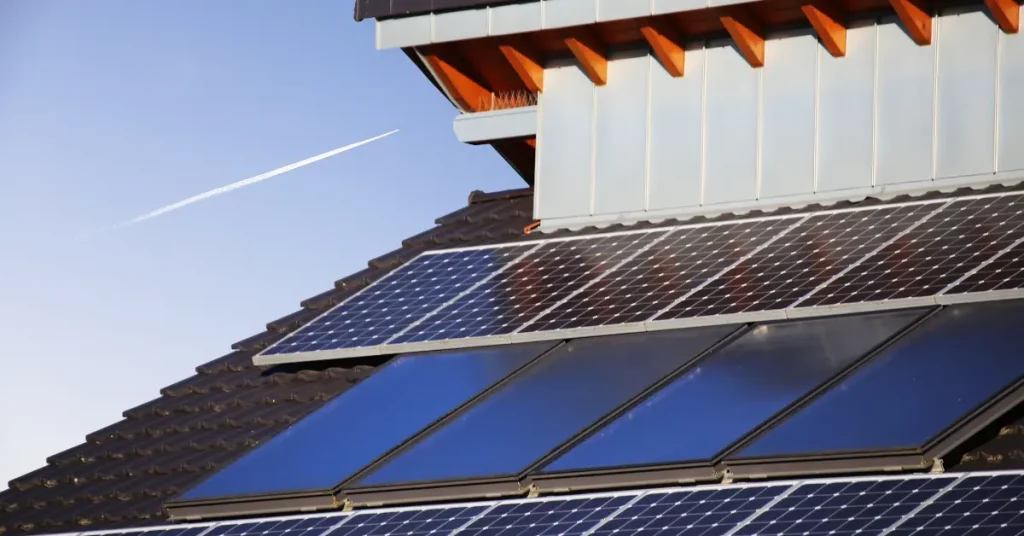
Solar panel ROI (return on investment) measures how much financial return you gain from installing a solar energy system compared to its initial cost. It helps determine whether solar is a smart financial decision by evaluating long term savings, incentives, and system performance.
In simple terms, solar panel ROI answers one key question: how much money will your solar system make or save over its lifetime compared to what you spent on it? Unlike the payback period, which focuses only on how quickly you recover your upfront cost, ROI reflects the total profitability over the system’s lifespan, often 25 to 30 years. (HBOWA New Energy)
How solar panel ROI is calculated
Solar panel ROI is typically expressed as a percentage. The standard formula is:
ROI = (Lifetime savings − Net system cost) ÷ Net system cost × 100
This calculation includes:
- Net system cost the total installation cost after incentives, rebates, or tax credits
- Lifetime savings the total electricity cost savings over the system’s lifespan
- System lifespan usually 25 to 30 years
For example, if a solar system costs $15,000 after incentives and saves $40,000 in electricity over its lifetime, the ROI would be approximately 167%, meaning the system generates significantly more value than its cost.

What is a good solar panel ROI?
A good solar panel ROI depends on location, system size, and energy costs, but general benchmarks include:
- Residential systems about 10% to 15% ROI
- Commercial systems about 12% to 18% ROI
- Large scale or industrial systems about 15% to 20% ROI
These returns are competitive with, and often more stable than, traditional investments like stocks or real estate, especially because solar savings are tied to avoided electricity costs rather than market volatility.
In many cases, homeowners recover their investment within 6 to 9 years, while the system continues generating savings for decades after that.
Key factors that affect solar panel ROI
Solar panel ROI is not fixed, it varies based on several important factors:
Installation cost and system size
The upfront cost of a solar system is one of the most significant factors affecting ROI. In 2025, residential systems typically cost around $2.20 to $3.00 per watt globally, with larger systems benefiting from economies of scale.
A properly sized system ensures maximum energy production without overspending on unnecessary capacity.
Electricity prices
Higher electricity rates increase solar panel ROI because each unit of solar energy offsets more expensive grid power. Regions with high utility costs tend to see faster payback periods and stronger returns.
Government incentives and policies
Incentives such as tax credits, rebates, and net metering policies significantly improve ROI. For example, the U.S. federal solar tax credit around 30% reduces upfront costs, making solar more financially attractive.
Sunlight and geographic location
Solar panel ROI is highly dependent on solar irradiance, or how much sunlight a location receives. Areas with more sun exposure generate more electricity, increasing savings and overall returns.
Technology and equipment quality
Modern technologies like high efficiency panels such as TOPCon and battery storage systems can improve ROI by increasing energy production and optimizing usage. Higher quality systems also degrade more slowly, preserving long term performance.
Solar panel ROI vs payback period
Although often confused, ROI and payback period measure different aspects of solar investment:
- Payback period the time it takes to recover the initial investment
- ROI the total financial return over the system’s lifetime
For example, a system may have a 7 year payback period but continue generating savings for another 18 to 20 years. This extended period of free electricity significantly increases overall ROI.
Understanding both metrics provides a clearer picture of solar’s financial value.
Residential vs commercial solar ROI
Solar panel ROI varies depending on the scale of the system:
Residential systems
Home systems typically generate steady savings through reduced electricity bills. While ROI is slightly lower than large systems, homeowners benefit from energy independence and increased property value.
Commercial systems
Businesses often achieve higher ROI because they consume more electricity and can offset higher energy costs. Many commercial installations reduce operating expenses by 20% to 40% annually, boosting returns.
Industrial and utility scale systems
Large scale solar projects benefit from economies of scale, lower cost per watt, and higher efficiency, leading to some of the strongest ROI figures in the solar sector.
Additional benefits that improve ROI
Beyond direct financial returns, solar panels offer additional advantages that enhance overall value:
Increased property value
Homes with solar installations can see property values increase by 3% to 5%, making solar both an energy and real estate investment.
Protection against rising energy costs
Solar systems lock in energy costs, protecting users from rising electricity prices over time.
Energy independence
Generating your own electricity reduces reliance on the grid and improves resilience during outages, especially when paired with battery storage.
Challenges that can impact solar panel ROI
While solar panel ROI is generally strong, several factors can reduce returns:
- Policy changes reductions in incentives or net metering can lower savings
- System degradation panels lose efficiency over time typically about 0.25% to 0.5% annually
- Improper installation poor system design can limit energy production
- Relocation before payback moving before recovering costs may reduce financial benefits
Careful planning, quality equipment, and professional installation are essential to maximize ROI.
The future of solar panel ROI
The outlook for solar panel ROI continues to improve. Declining equipment costs, advancements in panel efficiency, and growing policy support are making solar more accessible and profitable.
Battery storage is also playing a key role by allowing users to store excess energy and use it when electricity prices are highest, further increasing savings and ROI.
As energy prices rise and technology advances, solar panel ROI is expected to remain one of the most attractive long term investments in the energy sector.
Conclusion
Solar panel ROI is a powerful metric that highlights the financial value of investing in solar energy. By comparing lifetime savings with system costs, it provides a clear picture of long term profitability.
With typical returns ranging from 10% to 18%, relatively short payback periods, and decades of continued savings, solar panels offer a compelling combination of financial and environmental benefits. When designed and installed correctly, a solar system is not just an energy solution, it is a long term investment in cost savings, sustainability, and energy independence.
Sources
Preta Power Solar Power Return on Investment 2025
https://www.pretapower.com/solar-power-return-on-investment-what-is-the-roi-on-solar-panels-in-2025/ (HBOWA New Energy)