
Choosing the right solar panel can significantly impact the performance, reliability, and long-term value of a solar energy system. With advances in photovoltaic technology, today’s solar panels are more efficient and durable than ever before. However, with numerous options available, many homeowners and businesses struggle to determine which panel technology best fits their needs.
If you’re researching the top 5 picks solar panel options available today, it’s important to focus on performance characteristics rather than simply choosing the lowest-priced module. Factors such as efficiency, degradation rate, temperature performance, warranty coverage, and long-term energy production all influence the overall value of a solar investment.
This guide explores five of the most popular and promising solar panel technologies shaping the market in 2026.
What makes a solar panel worth considering?
Before comparing different technologies, it helps to understand what separates a high-quality solar panel from an average one.
Some of the most important factors include:
- Conversion efficiency
- Long-term degradation rates
- Warranty coverage
- Temperature performance
- Reliability
- Energy yield over time
According to the U.S. Department of Energy, solar panel efficiency refers to the percentage of sunlight converted into usable electricity. Higher efficiency generally means more energy production from the same amount of roof or ground space. (The Department of Energy’s Energy.gov)

Explore U.S. Solar State Rankings
Compare solar rankings, installed capacity, growth trends, and market performance across all 50 states. Discover regional insights to support smarter procurement and expansion decisions.
1. Monocrystalline solar panels
Monocrystalline solar panels remain the most widely used solar technology in residential and commercial installations.
These panels are manufactured using a single crystal silicon structure, which allows electrons to move more efficiently through the cell.
Why they are a top pick
Benefits include:
- High efficiency
- Proven reliability
- Long lifespan
- Strong manufacturer support
- Excellent space utilization
Most premium residential solar systems today use monocrystalline panels because they offer an ideal balance of performance and durability.
According to industry and NREL research, monocrystalline technology continues to dominate the market due to its efficiency and mature manufacturing processes. (atb.nrel.gov)
2. TOPCon solar panels
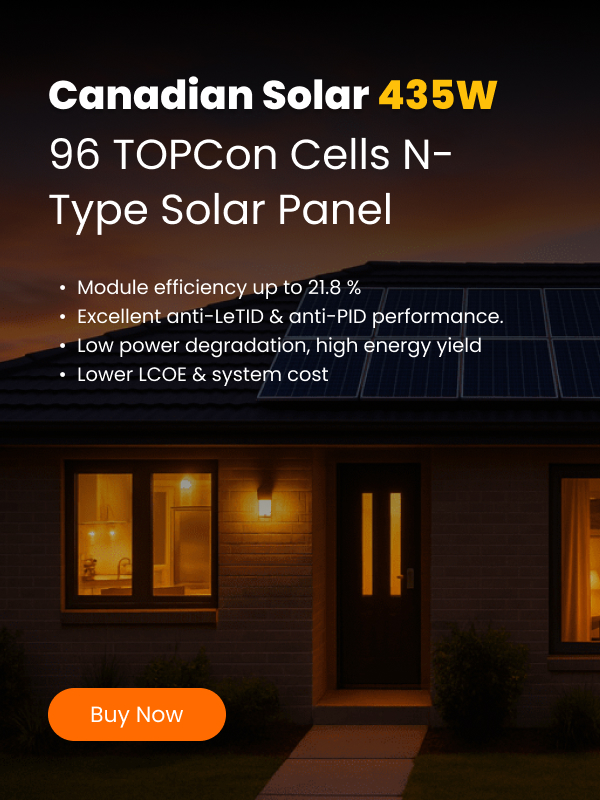
TOPCon, short for Tunnel Oxide Passivated Contact, has become one of the fastest-growing solar technologies in recent years.
TOPCon improves upon conventional silicon cell designs by reducing electrical losses and improving carrier collection.
Why they are a top pick
Advantages include:
- Higher efficiency than many traditional designs
- Improved low-light performance
- Better energy yield
- Lower long-term degradation
TOPCon modules are rapidly becoming a preferred option for both residential and utility-scale projects due to their strong performance characteristics.
Many manufacturers have shifted production toward TOPCon because of its ability to improve energy generation without dramatically increasing manufacturing costs. (Clean Energy Reviews)
3. N-Type solar panels
N-Type solar panels represent one of the most significant advancements in silicon solar technology.
Unlike traditional P-Type cells, N-Type cells are less susceptible to certain forms of performance degradation.
Why they are a top pick
Benefits include:
- Lower degradation rates
- Improved temperature performance
- Better long-term energy production
- Higher efficiency potential
N-Type technology is increasingly used in premium solar products because it can maintain stronger performance throughout the panel’s operational life.
Many of today’s TOPCon panels are also built on N-Type cell architectures.
4. Bifacial solar panels
Bifacial modules generate electricity from both the front and rear sides of the panel.
By capturing reflected sunlight from surrounding surfaces, bifacial technology can increase total energy generation.
Why they are a top pick
Advantages include:
- Higher energy yield
- Better performance in open environments
- Strong utility-scale economics
- Improved land-use efficiency
Bifacial panels are commonly deployed on:
- Ground-mounted systems
- Commercial projects
- Utility-scale solar farms
The International Energy Agency notes that bifacial technology has become increasingly important as developers seek higher energy production without expanding project footprints.
5. Heterojunction (HJT) solar panels
Heterojunction technology, commonly known as HJT, combines crystalline silicon with thin-film layers to improve solar cell performance.
Although HJT panels are typically more expensive, they offer some of the highest performance levels available in commercial solar products.
Why they are a top pick
Key advantages include:
- Exceptional efficiency
- Excellent temperature performance
- Low degradation rates
- High bifacial gain potential
HJT technology is increasingly being adopted for premium residential and commercial applications where maximum energy production is a priority.
Comparing the top five solar panel technologies
| Technology | Efficiency potential | Degradation resistance | Best use case |
| Monocrystalline | High | Good | Residential and commercial |
| TOPCon | Very high | Excellent | Residential, commercial, utility |
| N-Type | Very high | Excellent | Premium solar projects |
| Bifacial | High | Good | Ground-mounted and utility-scale |
| HJT | Extremely high | Excellent | Premium residential and commercial |
Each technology offers unique advantages depending on project goals and budget requirements.
Which solar panel technology is best?
There is no universal answer because the best solar panel depends on the project.
For homeowners
Monocrystalline, TOPCon, and N-Type panels are often the most attractive options because they maximize energy production in limited roof space.
For commercial projects
TOPCon and N-Type modules offer strong long-term economics and high energy yields.
For utility-scale developers
Bifacial and TOPCon technologies are increasingly favored due to their ability to maximize project output.
For maximum efficiency
HJT and advanced N-Type panels currently represent some of the highest-performing commercially available technologies.

Future solar panel innovations
Solar technology continues advancing rapidly.
Emerging developments include:
- Perovskite-silicon tandem cells
- Advanced back-contact designs
- Higher-efficiency HJT architectures
- Improved bifacial performance
Researchers at NREL and manufacturers worldwide continue working to increase efficiency while reducing manufacturing costs. Recent industry breakthroughs suggest that future commercial modules could significantly exceed the performance levels common today.
Conclusion
When evaluating the top 5 picks solar panel technologies, monocrystalline, TOPCon, N-Type, bifacial, and HJT panels stand out as the leading options in today’s market.
Each offers distinct benefits, from proven reliability and affordability to industry-leading efficiency and energy production. The ideal choice ultimately depends on available space, project goals, budget, and long-term performance expectations.
As solar technology continues evolving, buyers have access to increasingly sophisticated products capable of delivering decades of reliable clean energy production.
FAQs
What is the most common solar panel technology today?
Monocrystalline panels remain the most widely used solar technology in residential and commercial installations.
Are TOPCon panels better than traditional monocrystalline panels?
TOPCon panels generally offer higher efficiency and lower degradation rates compared to many conventional designs.
What are N-Type solar panels?
N-Type panels use a different silicon structure that helps improve efficiency and reduce long-term performance losses.
Are bifacial solar panels worth it?
Bifacial panels can significantly increase energy production in suitable installation environments.
Which solar panel technology has the highest efficiency?
HJT and advanced N-Type technologies currently rank among the highest-efficiency commercial solar panel options available.
Sources
- U.S. Department of Energy – Solar Photovoltaic Technology Basics
https://www.energy.gov/cmei/systems/solar-photovoltaic-technology-basics - U.S. Department of Energy – Solar Photovoltaic Performance and Efficiency Basics
https://www.energy.gov/cmei/systems/solar-photovoltaic-performance-and-efficiency-basics - National Renewable Energy Laboratory (NREL) – Solar Research
https://www.nrel.gov/solar/ - NREL – Solar PV Module Facts and Trends
https://docs.nrel.gov/docs/fy26osti/90740.pdf - International Energy Agency (IEA) – Solar PV
https://www.iea.org/energy-system/renewables/solar-pv