

For years, the federal solar tax credit was one of the most powerful incentives driving solar adoption across the United States. Homeowners could significantly reduce the cost of installing solar panels, battery storage, and other clean energy technologies through the federal government’s Residential Clean Energy Credit.
However, the federal solar tax credit landscape changed significantly in 2026. Recent federal legislation modified several clean energy incentives, creating new considerations for homeowners, businesses, installers, and developers.
This guide explains how the federal solar tax credit in 2026 works, who still qualifies, what changed, and what incentives remain available.
What is the federal solar tax credit?
The federal solar tax credit, officially known as the Residential Clean Energy Credit (Section 25D), was designed to encourage homeowners to invest in renewable energy systems such as:
- Solar photovoltaic (PV) systems
- Solar water heating systems
- Battery storage systems
- Geothermal heat pumps
- Small wind energy systems
The credit allowed eligible taxpayers to claim a percentage of installation costs as a direct reduction of their federal income tax liability.
What changed in 2026?
The biggest change is that the Residential Clean Energy Credit is no longer available for new residential solar expenditures made after December 31, 2025. The IRS updated its guidance following federal legislation enacted in 2025, which terminated Section 25D eligibility for expenditures made after that date.
This means:
- Homeowners who installed and paid for qualifying systems before January 1, 2026 may still be eligible to claim the credit.
- New residential solar systems purchased and installed in 2026 generally do not qualify for the former 30% Residential Clean Energy Credit.
Because many online resources still reference the Inflation Reduction Act’s original timeline, it is important to rely on the latest IRS guidance when evaluating eligibility.
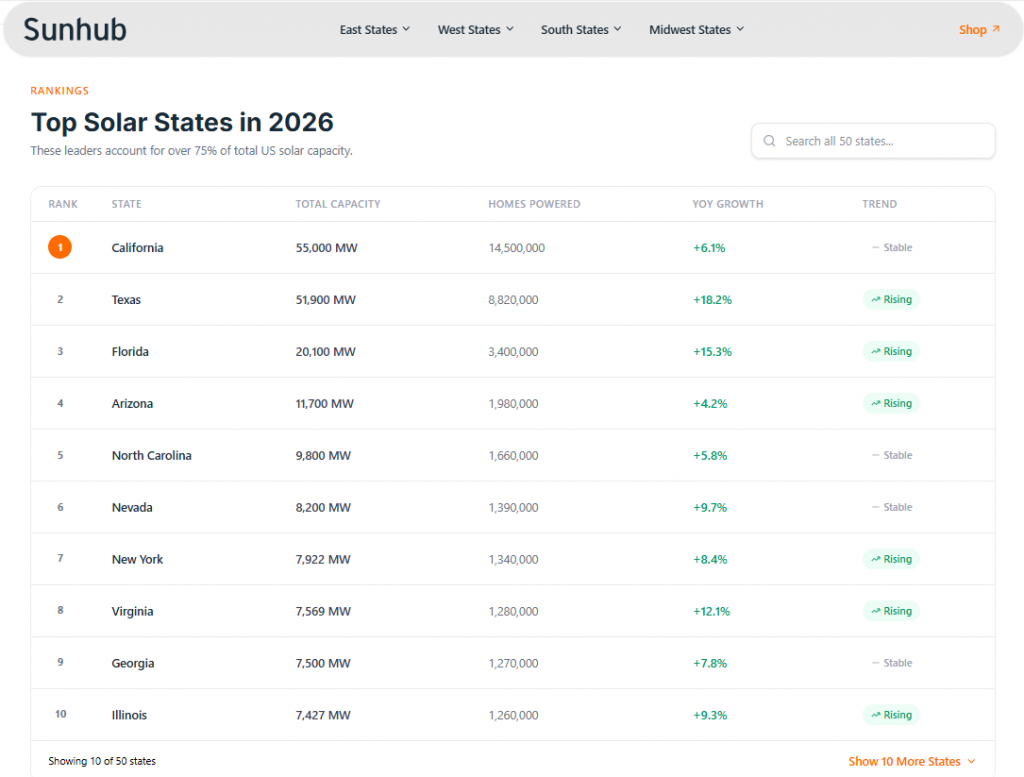
Explore U.S. Solar State Rankings
Compare solar rankings, installed capacity, growth trends, and market performance across all 50 states. Discover regional insights to support smarter procurement and expansion decisions.
How the federal solar tax credit worked before 2026
Prior to its expiration, eligible homeowners could claim a credit equal to 30% of qualified installation costs.
Eligible expenses typically included:
- Solar panels
- Inverters
- Mounting equipment
- Electrical components
- Labor and installation costs
- Battery storage systems meeting program requirements
For example, a $30,000 solar installation could generate a $9,000 federal tax credit.
Can homeowners still claim the credit in 2026?
Possibly.
If your qualifying solar project was completed and eligible expenditures were incurred before January 1, 2026, you may still be able to claim the credit when filing your tax return using IRS Form 5695. Eligibility depends on the timing of the expenditure and compliance with IRS requirements.
Homeowners should consult a qualified tax professional for guidance on their specific situation.
What incentives remain available in 2026?
Although the residential solar tax credit has ended for new expenditures, other incentives may still be available.
State and local solar incentives
Many states continue offering programs such as:
- Solar rebates
- Property tax exemptions
- Sales tax exemptions
- Performance-based incentives
- Net metering programs
Available incentives vary by state and utility service territory.
Utility incentive programs
Some electric utilities continue offering:
- Solar rebates
- Demand response programs
- Battery storage incentives
- Renewable energy programs
Homeowners should check directly with their local utility provider.
Commercial solar tax incentives
While residential incentives changed, certain commercial clean energy incentives remain available under federal law for qualifying projects. Businesses, developers, and project owners should evaluate current federal guidance and eligibility requirements before proceeding.
Why the federal solar tax credit was important
The federal solar tax credit played a major role in expanding solar adoption across the United States.
According to the U.S. solar industry, the credit helped:
- Lower upfront installation costs
- Improve project economics
- Accelerate residential solar adoption
- Encourage investment in battery storage
- Support clean energy deployment
Combined with declining equipment costs, the credit contributed to significant growth in the residential solar market over the past decade. (IRS)
Does solar still make financial sense without the federal tax credit?
For many homeowners, the answer may still be yes.
Several factors continue supporting solar economics:
Rising electricity costs
Electricity prices have increased across many parts of the United States, improving the value of on-site energy generation.
Lower solar equipment costs
Solar panel costs have fallen dramatically over the past decade due to manufacturing improvements and industry scale.
State-level incentives
Some states continue providing meaningful financial incentives that can improve project payback periods.
Battery storage benefits
Solar-plus-storage systems can provide additional value through backup power, self-consumption optimization, and demand management.
While payback periods may be longer without the federal tax credit, solar remains an attractive option in many markets.
How to determine if solar is still worth it
Every property is different.
Factors affecting solar economics include:
- Local electricity rates
- Available sunshine
- Roof condition
- System size
- Utility policies
- State incentives
- Financing options
A professional solar assessment can help estimate expected savings and system performance.
The future of solar incentives
Although the federal residential solar tax credit has ended for new expenditures, the solar industry continues to evolve.
Future growth is expected to be supported by:
- Falling technology costs
- Growing electricity demand
- Battery storage adoption
- Grid modernization
- State and utility incentive programs
Solar remains one of the fastest-growing sources of electricity generation in the United States, and many analysts expect continued expansion despite changes to federal incentives.
Conclusion
The federal solar tax credit in 2026 looks very different than it did just a year earlier. The Residential Clean Energy Credit that previously allowed homeowners to claim 30% of solar installation costs is no longer available for expenditures made after December 31, 2025.
However, solar energy continues to offer long-term savings opportunities through lower electricity bills, state-level incentives, and ongoing technology improvements. Homeowners considering solar in 2026 should carefully evaluate available incentives, project economics, and local market conditions before making a decision.
FAQs
Is the federal solar tax credit still available in 2026?
For new residential expenditures made in 2026, the Residential Clean Energy Credit is generally no longer available. The IRS states that the credit is not allowed for expenditures made after December 31, 2025.
What was the federal solar tax credit amount?
Before expiration, eligible homeowners could claim 30% of qualified clean energy installation costs. (Jackson Hewitt)
Can I still claim a solar tax credit if my system was installed before 2026?
Potentially yes. Systems and expenditures that met IRS requirements before January 1, 2026 may still qualify when filing taxes.
Are there still solar incentives available?
Yes. Many state, local, and utility-level solar incentive programs remain available, depending on your location.
Does solar still make sense without the federal tax credit?
In many cases, yes. Rising electricity prices, declining equipment costs, and available state incentives can still make solar a financially attractive investment.