
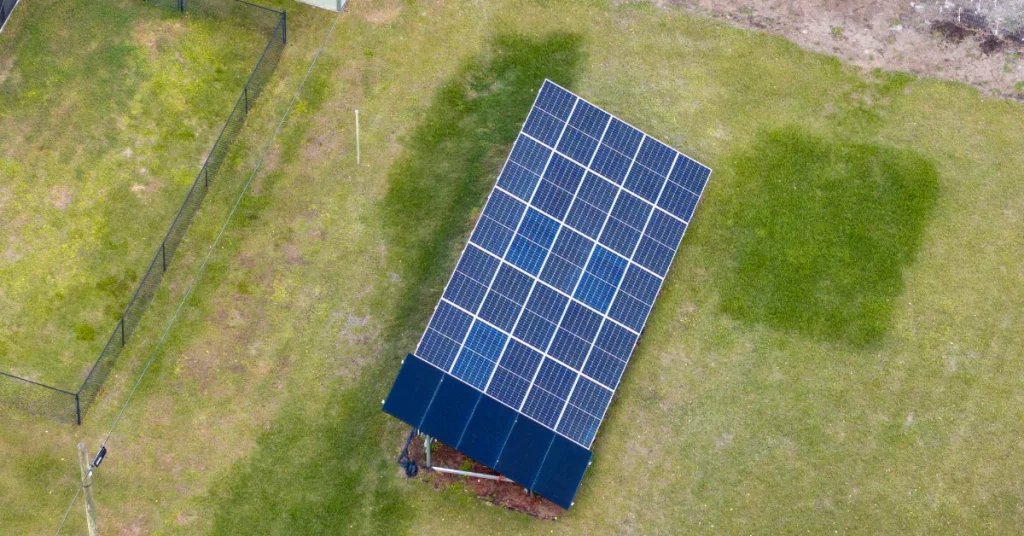
Ground-mounted solar systems have become an increasingly popular solution for homeowners, businesses, farms, and utility-scale developers seeking maximum energy production and greater installation flexibility. Unlike rooftop systems, ground mount solar design allows solar panels to be positioned at the optimal tilt and orientation, often resulting in higher energy output and easier long-term maintenance.
As solar technology continues to evolve, designing an efficient ground-mounted system requires much more than simply placing panels in an open field. Factors such as site conditions, soil composition, structural engineering, shading, drainage, local permitting, and electrical infrastructure all play critical roles in determining system performance and lifespan.
This guide explores the fundamentals of ground mount solar design, the different mounting options available, key engineering considerations, and best practices for building a high-performing solar installation.
What is ground mount solar design?
Ground mount solar design refers to the planning and engineering process involved in installing photovoltaic (PV) panels on land rather than on rooftops.
A typical ground-mounted solar system consists of:
- Solar panels
- Mounting structures
- Foundations
- Inverters
- Electrical wiring
- Monitoring equipment
- Grid connection or battery storage
The primary goal is to maximize energy production while ensuring structural stability, safety, and long-term reliability.
According to the National Renewable Energy Laboratory (NREL) and the Solar Energy Industries Association (SEIA), proper site assessment and structural design are essential for long-term PV system performance.
Why choose a ground-mounted solar system?
Ground-mounted systems offer several advantages over rooftop installations.
Optimal solar orientation
Unlike rooftops, which are limited by existing building geometry, ground-mounted arrays can be positioned for the ideal:
- Tilt angle
- Azimuth (direction)
- Row spacing
This often results in greater annual energy production.
Easier maintenance
Ground-mounted panels are typically easier to inspect, clean, and repair because technicians can access them without climbing onto a roof.
Scalability
Ground-mounted systems can easily be expanded as energy needs grow, making them ideal for:
- Farms
- Commercial facilities
- Industrial sites
- Utility-scale solar farms
Better airflow
Panels installed above the ground often experience improved airflow beneath the modules, helping reduce operating temperatures and improve efficiency.
Types of ground-mounted solar systems
Several mounting configurations are used depending on project size, terrain, and budget.
Fixed-tilt systems
Fixed-tilt systems position solar panels at a permanent angle throughout the year.
Benefits include:
- Lower installation costs
- Minimal maintenance
- Simple structural design
- Proven long-term reliability
Fixed-tilt systems remain the most common choice for residential and commercial projects.
Single-axis tracking systems
Single-axis trackers rotate panels from east to west, following the sun throughout the day.
Compared to fixed systems, they can increase annual energy production by approximately 15–25%, depending on location and climate. However, they also introduce higher equipment costs and maintenance requirements.
Dual-axis tracking systems
Dual-axis trackers follow both the daily and seasonal movement of the sun.
Although they can maximize energy production, they are generally reserved for specialized applications because of their higher cost and mechanical complexity.
Key factors in ground mount solar design
Site assessment
Every successful project begins with a comprehensive site evaluation.
Designers typically analyze:
- Available land area
- Topography
- Shading
- Soil conditions
- Drainage
- Flood risk
- Vegetation
Flat or gently sloping land with minimal shading is generally preferred.
Soil analysis and foundations
Foundation selection depends on local soil conditions.
Common foundation options include:
- Driven steel piles
- Ground screws
- Concrete footings
- Ballasted systems
Geotechnical testing helps determine which foundation type provides adequate structural support while minimizing installation costs.
Solar orientation and tilt
Proper orientation is one of the most important aspects of ground mount solar design.
In the Northern Hemisphere, panels generally face true south to maximize annual energy production, while the optimal tilt angle varies based on latitude and project objectives.
Row spacing
Adequate spacing between panel rows helps reduce self-shading, especially during winter months when the sun is lower in the sky.
Proper row spacing also allows access for maintenance equipment and vegetation management.
Structural and environmental considerations
Ground-mounted systems must withstand decades of environmental exposure.
Design engineers evaluate:
- Wind loads
- Snow loads
- Seismic conditions
- Corrosion potential
- Thermal expansion
- Local building codes
Structural components are commonly manufactured from galvanized steel or aluminum to provide long-term corrosion resistance.
Electrical design considerations
Ground mount solar design also includes electrical system planning.
Key components include:
- String configuration
- DC wiring
- Inverter placement
- AC collection systems
- Grounding and bonding
- Overcurrent protection
- Disconnect switches
Designers also evaluate voltage drop, cable routing, and future system expansion.
Ground-mounted vs. rooftop solar
| Feature | Ground-Mounted | Rooftop |
| Installation flexibility | Excellent | Limited by roof |
| Energy production | Often higher | Depends on roof orientation |
| Maintenance access | Easy | More difficult |
| Expandability | Excellent | Limited |
| Land requirement | Yes | No additional land |
For properties with sufficient open space, ground-mounted systems often provide greater design flexibility and improved long-term performance.
Best practices for ground mount solar design
To maximize system performance, industry best practices include:
- Performing a detailed site assessment
- Conducting geotechnical soil testing
- Minimizing shading throughout the year
- Selecting corrosion-resistant materials
- Designing for local wind and snow loads
- Planning for future maintenance access
- Using high-quality mounting systems certified for long-term durability
Following established engineering standards helps improve system reliability while reducing long-term maintenance costs.
Emerging trends in ground-mounted solar
Ground-mounted solar technology continues to evolve.
Recent innovations include:
Bifacial solar panels
Bifacial modules capture sunlight from both sides of the panel, increasing energy production when installed over reflective surfaces.
Agrivoltaics
Agrivoltaic systems combine agriculture with solar generation, allowing crops or livestock to coexist beneath elevated solar arrays.
The U.S. Department of Energy continues to support research into agrivoltaics as a way to maximize land productivity while expanding renewable energy generation.
AI-powered monitoring
Artificial intelligence is increasingly being integrated into solar monitoring platforms to improve:
- Performance forecasting
- Fault detection
- Maintenance scheduling
- Energy optimization
Conclusion
Ground mount solar design is about far more than selecting solar panels. A successful project requires careful planning, structural engineering, electrical design, and site evaluation to ensure maximum energy production over the system’s 25- to 30-year lifespan.
Whether designing a residential installation, commercial project, or utility-scale solar farm, investing in proper ground mount solar design helps improve performance, reduce maintenance costs, and maximize long-term return on investment. As solar technology continues to advance, ground-mounted systems remain one of the most efficient and scalable ways to generate clean, renewable electricity.
FAQs
What is ground mount solar design?
Ground mount solar design is the engineering process of planning and installing solar panels on land using specially designed mounting structures instead of rooftops.
Are ground-mounted solar systems more efficient than rooftop systems?
Often yes. Ground-mounted systems can usually be positioned at the ideal tilt and orientation, which may increase annual energy production compared to roof-mounted systems.
What foundation is used for ground-mounted solar panels?
Common foundation options include driven piles, ground screws, concrete footings, and ballasted systems. The best choice depends on soil conditions and project requirements.
What are the advantages of ground-mounted solar systems?
Ground-mounted systems offer easier maintenance, better airflow, greater scalability, flexible orientation, and the potential for higher energy production.
How long do ground-mounted solar systems last?
Most systems are designed to operate for 25–30 years or longer, with mounting structures engineered to withstand decades of environmental exposure.
Sources
- National Renewable Energy Laboratory (NREL) – Best Practices in PV System Installation (NLR Publications)
- U.S. Department of Energy – Farmer’s Guide to Going Solar (Agrivoltaics and Ground-Mounted Systems) (The Department of Energy’s Energy.gov)
- National Renewable Energy Laboratory – Photovoltaics Research