
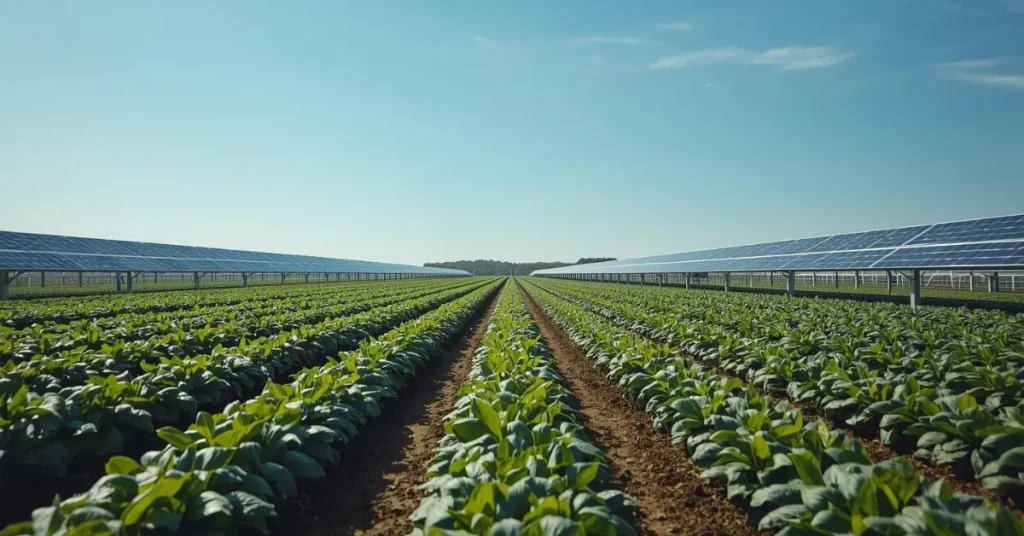
As our world strives to produce more food and clean energy, often on the same shrinking land base, an innovative solution is gaining momentum: agrivoltaics. This approach combines agriculture with solar energy production by installing photovoltaic (PV) panels above or among crops and farmland. Instead of sacrificing farmland for solar farms, agrivoltaics allows land to deliver two yields: food (or crops) and clean electricity.
Behind this concept are companies, suppliers, developers, and integrators, who specialize in agrivoltaic system design, equipment, and project deployment. In this article, we’ll explore what agrivoltaics means, why supplier choice matters, and highlight some of the top agrivoltaic systems suppliers shaping the market in 2025 and beyond.
What is agrivoltaics and why it matters
Agrivoltaics (sometimes called “agri‑PV” or “solar farming”) refers to systems in which solar panels are installed above cropland or grazing fields in a way that preserves agricultural activity beneath or between the panels. The idea is to maximize the use of land by co‑producing electricity and crops.
A well‑designed agrivoltaic system adjusts the configuration, panel spacing, tilt angle, or even tracking mechanisms, so that crops receive enough sunlight while solar modules still generate a significant amount of power.
Benefits of agrivoltaics include:
- Improved land use efficiency — farmland serves double duty: crop production and energy generation
- Additional revenue streams for farmers — income from electricity as well as crops
- Potential agricultural advantages — the shade from panels can reduce water stress for certain crops, help with temperature regulation, and protect against harsh sunlight
- Sustainable energy production — solar electricity helps reduce reliance on fossil fuels and supports renewable energy targets
Because agrivoltaics offers a way to combine food security and clean energy, it’s increasingly viewed as a key strategy for climate‑resilient agriculture and sustainable land use.
What agrivoltaic systems suppliers do
Suppliers in the agrivoltaic sector perform several critical roles. Their offerings may include:
- PV modules optimized for agrivoltaic use — sometimes bifacial (capturing sunlight on both sides), with appropriate tilt, spacing, or tracking to allow crops beneath to get enough light.
- Mounting and racking systems — structures that elevate or angle solar panels such that farming machinery can operate beneath, or crops can grow properly. These may be fixed‑tilt, elevated racks, or even dynamic (tracking) systems.
- Engineering, design, and project development — helping farmers, landowners or energy companies design agrivoltaic farms, select appropriate crops, and integrate solar into existing agricultural practices.
- Integration with energy storage, monitoring, or grid connection — sometimes combining agrivoltaic PV with battery systems or smart energy‑management software to maximize reliability and energy output.
Because agrivoltaics must balance sunlight, shade, crop needs, and energy production, supplier expertise and technology make a big difference. A well-chosen supplier can help ensure agrivoltaics deliver both healthy harvests and strong electricity output.
Key agrivoltaic systems suppliers to know in 2025
According to recent market research and industry reports, several companies have emerged as leaders in the agrivoltaic space globally.
Here are a number of notable suppliers and developers:
Sun Agri
- Known for agrivoltaic operations across Europe, especially in France.
- They focus on smart agrivoltaic systems including panel tracking and optimized design to support both crop growth and solar output.
BayWa r.e.
- A major developer in the agrivoltaic market, particularly active in Europe.
- Their projects often involve combining large-scale solar farms with active farmland, showcasing agrivoltaics’ potential at scale.
Enel Green Power
- A global renewable energy company investing heavily in agrivoltaic projects, including experimental designs that blend solar power with farming.
- Through their breadth of operations, they help legitimize agrivoltaics as a major component of sustainable energy strategy.
Trina Solar and JinkoSolar
- Both are global manufacturers of solar modules and have expanded their offerings to include modules suitable for agrivoltaic applications.
- Their strength in PV manufacturing helps bring reliable, efficient solar technology to agrivoltaic farms.
Next2Sun
- Known for innovative agrivoltaic designs such as vertical agrivoltaic installations that maximize land use while enabling crop growth and energy production.
- Such technologies illustrate the cutting edge of agrivoltaics, demonstrating how design innovation can overcome traditional land-use tradeoffs.
Smaller or specialized firms
There are also niche or regional players focusing on tailored agrivoltaic solutions or local markets, including companies like Agrivoltaic Solution LLC, REM TEC, or companies offering dynamic mounting, vertical installations, or crop‑specific designs.
How to choose an agrivoltaic supplier
If you are a farmer, landowner, or planner interested in agrivoltaics, supplier choice matters a lot. Here are some criteria to consider when evaluating a supplier:
- Experience in agrivoltaic design: Suppliers should understand both agriculture and solar, including how shade, light variability, and crop needs interact with solar panels.
- Quality of solar modules and mounting systems: Modules should ideally be efficient (e.g. bifacial panels) and mounting systems durable and adaptable (fixed tilt, tracking, vertical, etc.).
- Flexibility in system design: Good suppliers offer modular or customizable designs depending on crop type, land layout, and energy needs.
- Support for agriculture‑solar integration: This includes consulting on crop type, shading impact, soil health, irrigation needs, and farm machinery access.
- Scale and project capability: From small farms to large commercial installations, supplier capacity matters, especially for long-term maintenance, grid interconnection, and energy management.
- Track record, references, and transparency: Look for companies with existing agrivoltaic installations and data on crop yields, energy output, and maintenance.
What the future looks like for agrivoltaic suppliers
The agrivoltaic market is growing rapidly. Recent estimates peg the global agrivoltaics market value in 2025 at around USD 4.7–4.8 billion, with a projected compound annual growth rate (CAGR) of about 8–10% through 2032–2034.
This growth is fueled by rising demand for both sustainable agriculture and renewable energy, along with increasing interest in land-use efficiency and climate‑resilient farming.
At the same time, technical innovation continues: dynamic mounting systems, vertical agrivoltaics, bifacial panels optimized for farm shade balance, and smart monitoring systems that track both crop health and energy output.
As more farms, cooperatives, and governments invest in agrivoltaic projects, suppliers with proven expertise, strong technical portfolios, and flexibility will likely lead the pack.
Conclusion: Agrivoltaics depends on good partners
Agrivoltaics is not just a nice idea, it’s a practical, increasingly popular approach to meet global challenges of food production, clean energy, and land scarcity. But to succeed, agrivoltaic farms need more than solar panels, they need suppliers who understand both farming and energy, can design smart systems, and deliver reliable performance.
From major renewable energy firms to specialized agrivoltaic developers and solar manufacturers, there are many players out there. Suppliers such as Sun Agri, BayWa r.e., Enel Green Power, Trina Solar, JinkoSolar, Next2Sun and others are pushing the technology forward.
If you are considering agrivoltaics, take your time to evaluate suppliers based on their experience, design flexibility, equipment quality, and support for farming integration. With the right partner, your land can produce crops and clean electricity, giving you multiple returns from a single investment.
Agrivoltaic systems suppliers are not just selling solar panels. They are offering a vision: a future where farms grow food and power side‑by‑side, sustainably, efficiently, and profitably.
Sources
- Agrivoltaics market overview and top agrivoltaic companies list. (Verified Market Reports)
- Detailed market size, trends, and forecast for agrivoltaic equipment and services. (MarketResearch.com)
- Analysis of global agrivoltaics industry and major equipment providers. (growthmarketreports.com)