
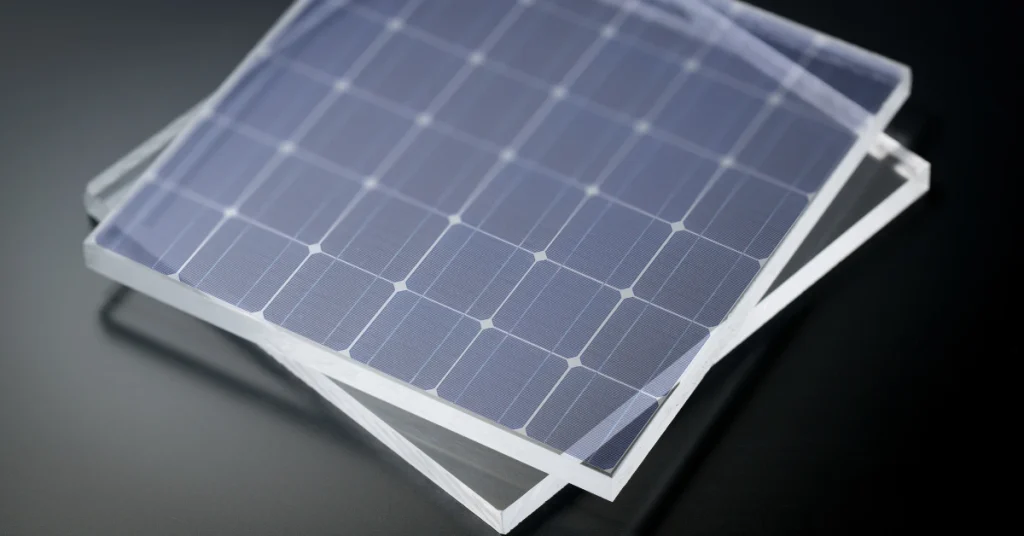
Choosing between glass-glass vs. glass-backsheet solar panels involves more than comparing wattage and price. Both designs convert sunlight into electricity, but their construction affects weight, moisture protection, mechanical durability, and long-term reliability.
Glass-glass modules use glass on both sides of the solar cells, while glass-backsheet modules combine front glass with a protective polymer rear layer.
For installers, EPCs, and solar equipment buyers, understanding these differences helps identify the right module for residential, commercial, and utility-scale projects.
Table of Contents
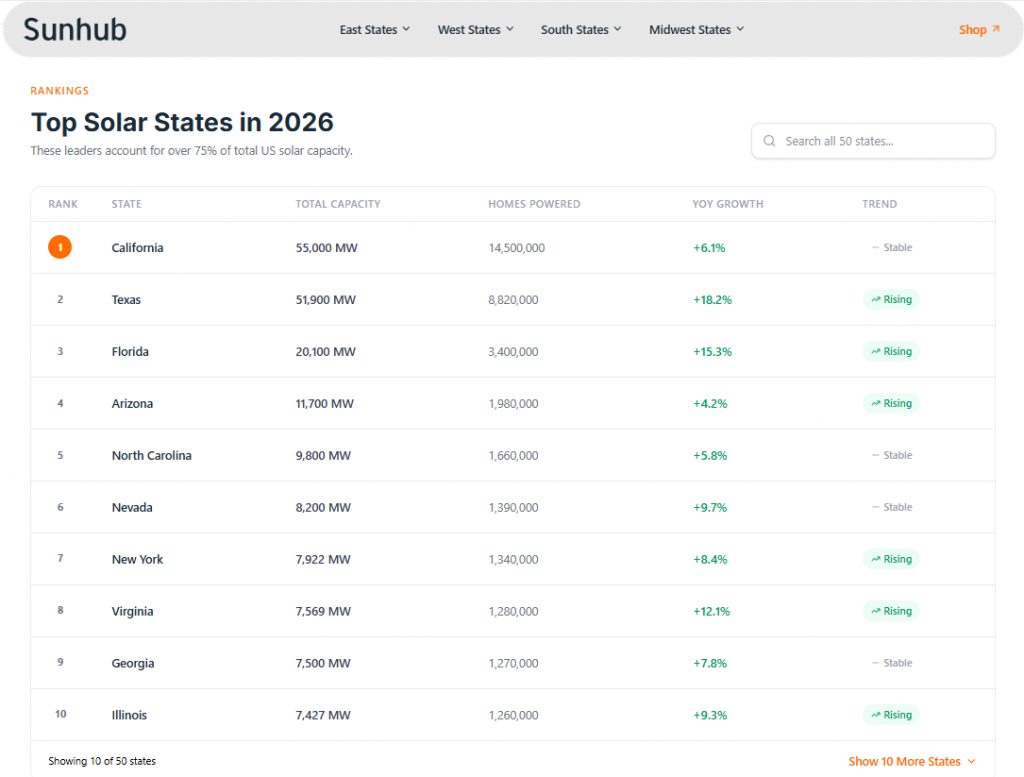
Explore U.S. Solar State Rankings
Compare solar rankings, installed capacity, growth trends, and market performance across all 50 states. Discover regional insights to support smarter procurement and expansion decisions.
What Are Glass-Glass Solar Panels?
Glass-glass solar panels, also called dual-glass modules, contain photovoltaic cells enclosed between two glass sheets.
A typical construction includes front glass, encapsulant, solar cells, rear encapsulant, and rear glass.
The rear glass provides a durable barrier against moisture and environmental exposure. Many glass-glass modules also use bifacial cells, allowing them to generate electricity from light reaching both sides.
However, not every glass-glass panel is bifacial.
Depending on glass thickness and module dimensions, dual-glass construction may increase weight or create different mechanical stress considerations.
What Are Glass-Backsheet Solar Panels?
Glass-backsheet solar panels use tempered glass on the front and a polymer-based protective sheet on the rear.
The backsheet provides electrical insulation and protects internal components against moisture, ultraviolet exposure, and environmental stress.
Backsheets may contain multiple polymer layers, including materials such as polyethylene terephthalate (PET), polyvinyl fluoride (PVF), or polyvinylidene fluoride (PVDF).
Glass-backsheet modules are widely used in residential and commercial solar installations.
Their main advantages often include lower weight, established manufacturing processes, and competitive pricing.
However, long-term durability depends heavily on backsheet material quality and manufacturing conditions.

Glass-Glass vs. Glass-Backsheet Solar Panels: Key Differences
| Feature | Glass-glass panels | Glass-backsheet panels |
|---|---|---|
| Rear protective layer | Glass | Polymer backsheet |
| Moisture protection | Strong barrier through glass surfaces | Depends on polymer construction |
| Weight | Often heavier, depending on design | Often lighter |
| Bifacial compatibility | Common | Possible with transparent backsheets |
| Mechanical durability | Depends on glass thickness and mounting | Depends on glass, backsheet, and frame |
| Initial cost | May be higher | Often more economical |
| Warranty | Many models offer 30-year performance warranties | Varies by manufacturer and model |
| Common applications | Utility-scale, commercial, bifacial systems | Residential, commercial, weight-sensitive installations |
Neither construction is universally superior. Actual performance depends on the specific module design, materials, and installation conditions.
Durability and Long-Term Degradation
One major difference between these module types is their response to environmental exposure.
Glass provides an effective barrier against moisture transmission through the rear surface.
This can reduce certain degradation risks associated with moisture entering the module.
Polymer backsheets also provide environmental protection, but their durability varies by chemical composition, thickness, and exposure conditions.
Some historical backsheet formulations have experienced cracking, discoloration, or delamination after prolonged outdoor exposure.
Glass-glass modules are not immune to failure. They may experience glass breakage, edge-seal deterioration, or other material-related problems.
Therefore, buyers should evaluate independent reliability testing rather than assuming that rear-glass construction guarantees longer service life.
Weight and Mechanical Strength
Module weight matters for rooftop installations, transportation, and mounting-system design.
Glass-glass panels contain two glass sheets, but manufacturers may use thinner glass to manage overall weight.
Glass-backsheet modules typically use a thicker front glass sheet paired with a lightweight polymer rear layer.
For example, one module might use 2.0 mm glass on both sides, while another uses 3.2 mm front glass and a polymer backsheet.
These specifications alone do not determine the final module weight or strength.
Wind-load ratings, snow-load ratings, hail resistance, and mounting requirements must be assessed using the manufacturer’s datasheet.
In hail-prone regions, front-glass thickness and tested impact resistance deserve particular attention.
Bifacial Energy Generation
Bifacial solar panels generate electricity from sunlight reaching both the front and rear surfaces.
Glass-glass construction is frequently used for bifacial modules because the rear glass can transmit light.
This makes it attractive for ground-mounted systems with reflective surfaces beneath the panels.
However, bifacial performance also depends on ground reflectivity, mounting height, row spacing, and shading.
Glass-backsheet modules can also support bifacial operation when designed with transparent backsheets.
A glass-glass panel does not automatically generate more electricity than a glass-backsheet panel. Buyers should compare cell technology, rated power, bifaciality, and expected site-specific energy yield.
Cost and Warranty Considerations
Glass-glass modules may carry a higher initial purchase price, although the difference varies by manufacturer, technology, and market conditions.
Potential long-term benefits include moisture protection, bifacial energy generation, and extended performance warranties.
Many modern dual-glass modules advertise 30-year power warranties, but warranty duration alone does not establish superior reliability.
Buyers should distinguish between:
- Product warranty: Covers specified manufacturing defects and workmanship issues.
- Performance warranty: Guarantees a defined minimum power output over time.
For example, a 30-year performance warranty does not necessarily mean the manufacturer covers every physical defect for 30 years.
Solar professionals can compare solar panels available through Sunhub while reviewing module construction, manufacturer warranties, and technical specifications.
Which Solar Panel Type Should You Choose?
The appropriate construction depends on project requirements.
| Project consideration | What to prioritize |
|---|---|
| Weight-sensitive rooftop | Module mass and structural capacity |
| Utility-scale ground mount | Bifacial yield and lifetime economics |
| Hail-prone location | Verified impact resistance |
| Hot, humid environment | Moisture resistance and reliability testing |
| Limited equipment budget | Installed cost and expected energy output |
| Long-term ownership | Degradation, warranties, and replacement risk |
For large projects, evaluating both options through an energy-yield and lifecycle-cost model can help determine which offers better value.
Conclusion
The choice between glass-glass and glass-backsheet solar panels depends on project conditions rather than construction alone.
Glass-glass modules offer strong moisture protection and are widely used in bifacial applications. Glass-backsheet modules remain attractive where weight, cost, and established product performance are priorities.
Both technologies can provide reliable long-term electricity generation when properly manufactured, tested, and installed.
For solar buyers, the most effective approach is to compare module-specific reliability data, mechanical ratings, warranties, and projected energy output before making a procurement decision.
Frequently Asked Questions
Are glass-glass solar panels better?
They can offer advantages in moisture protection and bifacial applications, but the better option depends on module design and project conditions.
Are glass-glass panels heavier?
Often, but not always. Weight depends on glass thickness, panel dimensions, framing, and other construction details.
Do glass-glass solar panels last longer?
Some designs may offer durability advantages, but actual service life depends on materials, manufacturing quality, and environmental conditions.
Can glass-backsheet panels be bifacial?
Yes. Certain glass-backsheet modules use transparent rear materials that allow sunlight to reach bifacial solar cells.