
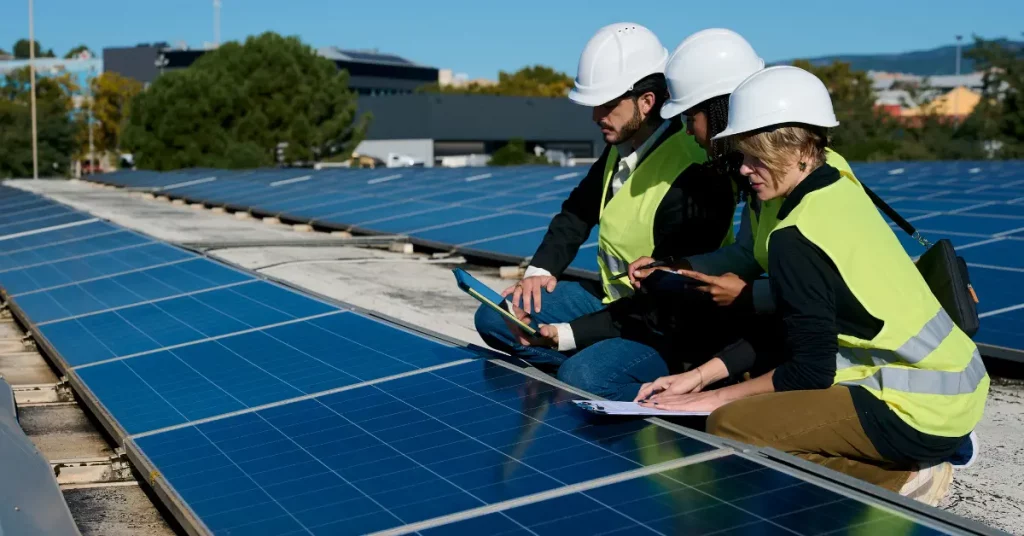
When you decide to install a solar energy system, whether on your home or business, one of the most important steps you’ll encounter is the solar project permitting process. Most people focus first on hardware costs, energy production, or financing. But navigating the permitting maze is a necessary step before panels can be safely installed and legally connected to the electrical grid. Understanding how permitting works, why it matters, and how to streamline it can save you time, money, and frustration.
In this blog we explain what permitting means, who oversees it, how the process typically unfolds, why it varies across locations, and what you can do to get approvals faster and more reliably.
What solar permitting is and why it matters
In construction and building terms, a permit is official permission from a governmental authority that allows a project to be built. For solar projects in the United States, permitting serves several purposes: it ensures the system is designed safely, complies with local building and electrical codes, meets fire safety standards, and is structurally sound. Permits are critical to protect property owners, residents, utility workers, and the broader community.
Installers and contractors must follow local regulations because Authority Having Jurisdiction (AHJ) entities, usually city, county, or municipal building departments, are responsible for enforcing codes and inspecting installations. If a system is installed without proper permitting and inspection, the consequences can include fines, forced removal, mandatory re-installation according to code, and even loss of contractor license.
Who oversees solar permitting
Two separate but related authorities oversee solar project permitting:
1. Local Authority Having Jurisdiction (AHJ)
The AHJ is the local government body, such as a city, county or township, that enforces building, electrical, and fire codes. The AHJ reviews and approves your permit application and inspects the installation to verify compliance with safety and construction standards.
2. Utility interconnection authority
Even after the AHJ approves a permit, you need permission from the electric utility to connect your system to the grid. This utility approval is often called Permission to Operate (PTO) and involves submitting plans and technical details so the utility can safely integrate your solar system’s output.
In many communities, the AHJ and utility processes are separate, but in some cases, especially where the utility is municipal, they may be connected or run through the same department.



Why the permitting process can be complex
Solar project permitting is not uniform across the country. There is no single federal solar permit. Instead, each AHJ determines how to implement national or state building codes locally, and that leads to variation in requirements. Permitting processes may differ in:
- Required paperwork and documentation
- Structural and electrical design review expectations
- Roof load and fire code requirements
- Allowed rooftop panel placements and setbacks
- Interconnection requirements for grid-tied systems
- Submission format (paper, PDF, or online portal)
Because of this variability, installers working across jurisdictions must understand many local rules. What is routine in one town might be complicated in another. Having accurate permit documentation and correct plan sets, the detailed blueprints and technical specifications submitted for approval, is essential to avoid delays.
Breakdown of the solar permitting steps
Although details vary by location, the solar project permitting process generally follows these key phases:
1. Prepare and submit permit application
Before you apply, a contractor drafts a plan set, a package of documents that outlines the system design, equipment, wiring diagrams, structural calculations, site information, and safety details. These plans show exactly what will be installed and how.
Once ready, this plan set is submitted to the local AHJ. Depending on the jurisdiction, the submittal may be done online through a portal like SolarAPP+ (an automated permitting platform backed by SEIA and NREL that aims to standardize and speed approvals), through email or PDF, or in person at the building department.
Some AHJs now offer instant or expedited electronic permitting, allowing simpler systems to be approved quickly. However, complex systems, larger commercial projects, or panels on engineered roofs usually require a more detailed review and take longer.
2. Review and approval
After submission, the AHJ reviews the plan set against local code requirements. This review may take anywhere from a few days to several weeks or longer, depending on how busy the department is and how complete your application is. If there are omissions or errors, the AHJ will request corrections, which adds time to the process
Some jurisdictions also participate in newer processes like SolarAPP+, which automatically checks projects against local rules and can grant instant or near-instant approvals for standard residential systems. As of recent data, dozens of U.S. communities have adopted SolarAPP+, offering same-day permits for eligible plan sets.
3. Utility interconnection and permission to operate
Once the AHJ issues a construction permit, installers can proceed with equipment procurement and installation. But before your system can be energized, you must also obtain permission to operate (PTO) from the utility. This typically involves submitting technical details (such as the inverter and disconnect specifications) and final inspection reports.
Utilities often have their own online systems for net metering or interconnection agreements that you must complete before your system can feed power into the grid.
4. Inspection and final approval
After installation, the AHJ performs a final inspection to confirm that the system was built as designed and meets code standards. The inspector checks mounting hardware, wiring, grounding, panel placement, and safety disconnects. If everything meets standards, the AHJ signs off.
Finally, after both the AHJ and the utility approve, your solar system can be switched on and begin generating power.
Common permitting requirements
Solar permitting typically requires several pieces of documentation:
- Detailed site plan with panel layout
- Roof or structural information showing compliance with load standards
- Electrical one-line diagrams and wiring specifications
- Equipment specifications including inverters, modules, and disconnects
- Safety plans for fire, electrical, and structural considerations
Plan sets that accurately reflect local codes help ensure that submissions sail through review without extensive revisions or resubmissions. Errors in documentation are a major cause of delays and added cost. Using tools that automate permit-ready plan set generation can help reduce these risks.
Typical permit fees and timelines
Permit fees vary widely by location. In many residential installations, permit costs are typically several hundred dollars, often ranging from $300 up to about $1,000 or more depending on local rules and system size. Some states cap permitting fees to prevent excessive charges.
Timelines also vary heavily based on jurisdiction and system complexity. A simple solar permit might be approved in a few days in jurisdictions that support instant electronic permitting. In other places, it can take several weeks or months if manual review and back-and-forth corrections are required.
How modernization and automation are changing permitting
Permitting has traditionally been one of the slowest and most frustrating parts of the solar installation process. Soft costs, the non-hardware expenses associated with solar, can include the labor and time spent navigating permitting. In fact, permitting alone can account for a notable portion of total soft costs.
To address this, industry initiatives and technology platforms are emerging to simplify and standardize the process:
SolarAPP+ (Solar Automated Permit Processing) is a collaborative tool developed by the national solar industry and the National Renewable Energy Laboratory (NREL) to help AHJs adopt automated review standards and reduce permit timelines. It offers rules-based, instant permitting for eligible residential systems and is expanding to cover battery storage and small commercial projects.
Databases like Orange Button help installers identify the correct AHJ and code requirements for a specific address more quickly, reducing the administrative burden of tracking down local building rules.
Software tools that integrate design and permitting, such as permit-ready plan set generators, further cut down administrative work and reduce errors. Some cloud-based platforms now produce permit-ready documents in a fraction of the time it used to take.
Tips for smoother permit approvals
If you’re planning a solar project, here are some best practices to help navigate permitting:
- Start early: Begin permit preparation as soon as your design is finalized to avoid delays.
- Know your AHJ: Identify the local permitting authority and their specific requirements before you submit.
- Use electronic submissions when available: Online portals often speed reviews.
- Prepare accurate plan sets: Submit complete, well-organized documentation to minimize review corrections.
- Monitor updates to SolarAPP+ adoption: Participating in automated permitting programs can drastically shorten approval times.
Final thoughts
The solar project permitting process is a necessary part of every solar installation in the U.S. It ensures systems are designed and built safely and in compliance with building and electrical codes. Although permitting can sometimes feel complex or protracted, understanding each step and leveraging modern tools can help reduce delays and costs.
As automation tools like SolarAPP+ and improved data resources continue to spread, the solar permitting landscape is becoming more streamlined, predictable, and accessible, helping solar installations go from concept to energized system faster than ever before.