
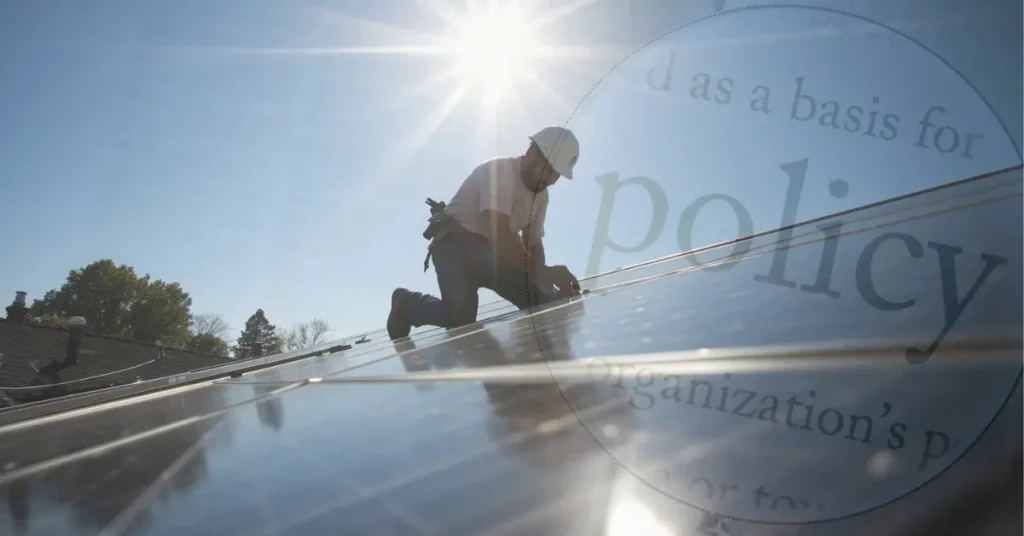
According to the 15th annual Interstate Renewable Energy Council (IREC) “National Solar Jobs Census,” the U.S. solar industry employed 280,119 workers in 2024, roughly the same number as in 2023, marking a flat employment trend amid growing uncertainty for the sector.
When including those who spent a portion (but not the majority) of their time on solar-related work, total employment rises to 370,556 jobs. With battery storage jobs factored in, the broader solar + storage workforce reached 464,053 workers in 2024.
Breakdown of workforce and sector growth
- The largest share of jobs, 178,713, were in installation and project development, nearly two-thirds of all solar employment.
- Other segments included manufacturing (32,491 jobs), wholesale trade & distribution (34,625 jobs), and operations & maintenance (21,833 jobs).
- Notably, battery/storage employment increased: clean-storage jobs grew 4% year‑over‑year, rising by 3,905 positions to a total of 93,497 workers in 2024.
The census draws from data collected from 42,800 U.S. energy‑sector firms (with roughly 10,900 providing full responses) during late 2024 and early 2025. This gives a comprehensive snapshot across all 50 states.
Why employment held steady and why uncertainty looms
The 2024 job figures come before the full impact of 2025’s major federal policy changes, including the repeal of some tax credits under the One Big Beautiful Bill Act (OBBBA). IREC notes this year’s census provides a critical baseline to monitor how those changes will affect clean‑energy employment going forward.
Federal incentives and tax credits have long supported solar growth across installation, manufacturing, and distribution segments. As those supports shift, the economic feasibility of new projects may be tested, potentially impacting hiring, project pipelines, and overall market momentum.
Geographic and political patterns
Contrary to perceptions that solar jobs are concentrated in “blue” states, 2024 saw notable workforce growth in several traditionally Republican states:
- Ohio — +5%
- Georgia — +4.5%
- Utah — +3.5%
- Texas — +3% (solarpowerworldonline.com)
States with the largest overall solar employment remained California, Florida, Texas, New York, and Massachusetts. For the fourth consecutive year, Nevada led in solar jobs per capita.
Broader context: solar and storage remain among the biggest clean‑energy employers
Even with employment leveling off, solar (and solar + storage) remains one of the largest clean‑energy employers in the United States. The sector still supports more jobs than coal and is second only to energy efficiency among clean-energy fields.
In a 2025 analysis, some industry observers noted that while total renewable‑energy employment in the U.S. remains robust, growth has moderated compared with previous years — reflecting both broader economic headwinds and policy uncertainty.
What’s next: Why 2025 and beyond are critical
With the OBBBA and related policy changes now in effect, 2025 may be a turning point for solar employment. IREC recommends using the 2024 census data as a baseline for tracking job impacts, project slowdowns, or recovery, depending on how the market adjusts.
Key factors to watch:
- Whether reduced incentives lead to project cancellations or delays
- How storage deployment and new technologies offset disruptions in solar installation work
- Regional shifts in solar investment and state-level policy support
Implications:
The 2024 employment data show the U.S. solar industry remains a major job provider, even in a year of uncertainty. But the stability masks underlying stress. As the clean‑energy sector adapts to shifting policies and economic pressures, long-term job growth may depend on sustained investment, policy clarity, and diversification into storage and grid modernization.