
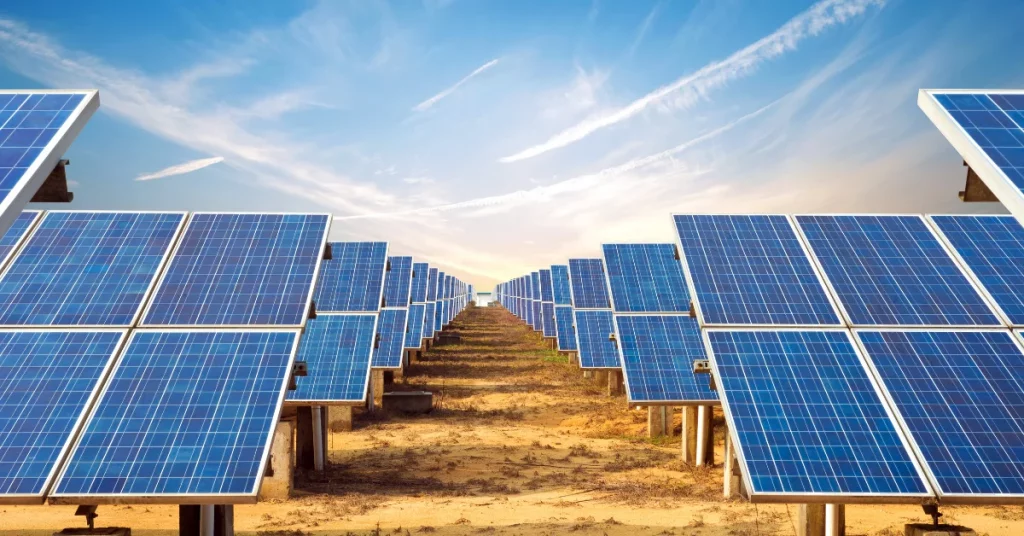
Solar panel degradation refers to the gradual loss of a solar panel’s ability to generate electricity over time. Even the best solar panels don’t maintain 100% of their original output forever, they slowly lose performance year after year. Understanding solar panel degradation helps homeowners, businesses, and installers predict long-term energy production, warranty coverage, and financial returns from a solar energy system.
In practical terms, solar panels typically degrade at an average rate of around 0.5% to 0.8% per year, though this can vary based on materials, manufacturing, climate conditions, and system installation quality. This means that after 25 years, many panels still operate at roughly 80% to 90% of their original capacity, which aligns with most manufacturer warranties.
How and why panels degrade depends on a mix of physical, chemical, and environmental factors, and many of them can be addressed with thoughtful design and regular maintenance.
How does solar panel degradation happen?
Solar panel degradation happens because the materials inside a photovoltaic (PV) module slowly wear down when exposed to the elements. Over time, this wear reduces the panel’s efficiency, its ability to convert sunlight into usable electricity. There are several key mechanisms and forces behind this process:
Initial vs long-term degradation
When a solar panel is first installed and exposed to sunlight, it experiences initial degradation, which occurs in the early operating phase. This type of degradation is usually faster than what comes later and is partially caused by unstable factors during manufacturing and first use. For many panels, initial degradation can be around 1%–3% in the first few months.
After this initial period, degradation slows and enters the long-term phase, where it continues at a more predictable, gradual rate for the remainder of the panel’s lifespan.
Common causes of solar panel degradation
Solar panel degradation is influenced by a range of internal and external factors. Some are inherent to the technology itself, while others depend on where and how panels are installed.
Temperature fluctuations
Repeated cycles of heating and cooling, known as thermal cycling, are one of the most common causes of solar panel degradation. During the day, panels heat up under sunlight, and at night they cool down. This expansion and contraction places stress on the panel materials and soldered connections, potentially causing small cracks and fractures in the solar cells over time. These microcracks reduce electrical conduction and ultimately lower output.
Humidity and moisture
Moisture from humidity, dew, or rain can seep into solar panels, especially if seals are compromised. Water ingress can corrode internal metal parts, degrade encapsulation materials, and lead to delamination (when layers of the panel separate). All of these effects contribute to performance loss and increase degradation.
Ultraviolet (UV) radiation
Solar panels are built to absorb sunlight, but the same ultraviolet (UV) radiation that powers the solar cells also affects the material that protects them. Over time, consistent UV exposure can make encapsulant layers brittle, discolor backsheets, and reduce the transparency of the protective layers, limiting how much light reaches the solar cells.
Dust, dirt, and soiling
Accumulation of dust, pollen, bird droppings, and other debris on the panel surface can block light and reduce energy production. While cleaning doesn’t change the inherent degradation of the panel materials, soiling can make degradation appear worse because the panel simply isn’t receiving as much sunlight.
Electrical stress and defects
Certain electrical phenomena, such as potential-induced degradation (PID), can also contribute to performance loss. PID occurs when high system voltages cause leakage currents between the cells and grounded components, leading to power loss and potential failure if not properly managed.(Wikipedia)
How fast do solar panels degrade?
The rate of degradation depends on panel quality, manufacturing standards, and environmental conditions. Here’s a generalized look at typical rates:
- High-quality panels: ~0.25%–0.5% per year
- Average commercial panels: ~0.5%–0.8% per year
- Lower-quality panels or harsher environments: 1% or more per year possible.(Solar Products Information)
Example: A solar panel that starts with 100% output might be expected to operate at around 92% after 10 years and about 80%–85% after 25 years. These projections are based on typical degradation patterns observed in real-world installations.
Manufacturers often include degradation information in warranties, which usually guarantee a certain percentage of original output (often 80% or more) after a defined period, such as 25 years.
Does solar panel degradation mean panel failure?
Not necessarily. Degradation means a loss of efficiency, not sudden failure. Most panels continue producing electricity even at reduced output. A degraded panel doesn’t usually stop working entirely; it just delivers less power than it once did.
However, if degradation exceeds expected levels or if there are signs of physical damage (like cracking or delamination), it may be worth consulting a solar professional to inspect the system. In rare cases, severe issues like PID or storm damage can warrant repair or replacement.
Can degradation be slowed?
Although some degree of solar panel degradation is inevitable, there are ways to minimize and delay it:
Choose high-quality panels
Panels from reputable manufacturers with low certified degradation rates generally last longer and perform better over time. Look for panels tested under strict international standards and backed by strong performance warranties.
Proper installation and handling
Panels that are carefully installed with proper mounting, wiring, and ventilation experience fewer stress-related issues. Poor installation can introduce problems like microcracks or electrical stress that accelerate degradation.
Regular cleaning and maintenance
Keeping panels free of dirt and debris helps them produce as much energy as possible and prevents soiling from misrepresenting natural degradation. In dusty regions, more frequent cleaning can be particularly beneficial.
Environment-appropriate design
In areas with high humidity, extreme temperatures, or frequent storms, choosing panels with robust encapsulation and moisture-resistant materials can slow degradation.
Conclusion
Solar panel degradation is a natural and expected process in every PV system. Panels gradually lose efficiency over time due to environmental exposure, material wear, and stresses from daily operation. The key is understanding how degradation works so you can plan for long-term performance, choose the right equipment, and maintain your system effectively.
By selecting high-quality panels, ensuring proper installation, and keeping them clean, you can maximize energy production and extend the useful life of your solar investment, making solar a reliable and cost-effective energy solution for decades to come.