

Utah has become one of the fastest-growing residential solar markets in the western United States. With abundant sunshine, rising electricity demand, and improving solar technology, many homeowners are exploring whether installing solar panels in Utah is a worthwhile investment.
However, a successful solar project depends on more than the state’s sunny climate. Utility export policies, financing options, system sizing, equipment quality, and available incentives all influence long-term savings.
According to the U.S. Energy Information Administration, solar energy continues to play an increasingly important role in Utah’s electricity generation, with both utility-scale and distributed rooftop installations expanding across the state. Combined with Utah’s favorable solar resource, this makes residential solar an attractive option for many households.
This guide explains how solar panels work in Utah, the incentives currently available, utility considerations, and what homeowners should evaluate before purchasing a system.
Is Utah a Good State for Solar Panels?
Yes. Utah receives significantly more annual sunshine than the national average, making it well suited for photovoltaic systems.
Many parts of the state experience more than 220 sunny days each year, allowing rooftop solar systems to produce electricity consistently throughout all seasons.
Other factors that make Utah attractive for solar include:
- Excellent solar irradiance
- Dry climate with relatively low humidity
- Growing adoption of residential renewable energy
- Increasing availability of battery storage
- Strong installer competition in many communities
While winter snow can temporarily reduce production, modern solar systems are designed to continue generating electricity throughout the year, and annual energy production remains strong.
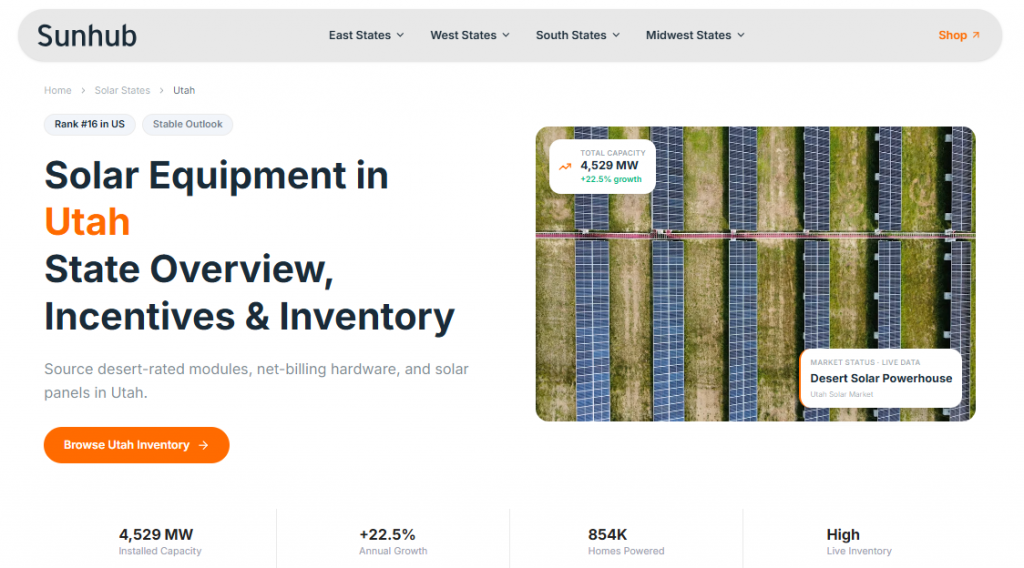
Explore Utah’s Solar Market
View Utah’s solar ranking, installed capacity, annual growth trends, market performance, and popular solar products and brands. Use these insights to support smarter procurement and expansion decisions across the state.
How Much Do Solar Panels Cost in Utah?
There is no single statewide average price published by a government agency because installation costs vary by home and installer.
Several factors influence the final project cost, including:
- System size
- Roof complexity
- Panel efficiency
- Inverter type
- Battery storage
- Electrical upgrades
- Local permitting requirements
- Labor costs
- Financing structure
Instead of focusing only on the lowest quoted price, homeowners should compare the overall value of each proposal.
Every quote should clearly identify:
- Equipment manufacturers
- Estimated annual energy production
- Product warranties
- Workmanship warranty
- Expected degradation
- Total installed price
- Financing fees, if applicable
Obtaining at least three detailed proposals remains one of the best ways to compare system quality and pricing.
Solar Incentives Available in Utah
The federal Residential Clean Energy Credit is no longer available for residential systems installed after December 31, 2025. Utah homeowners may still benefit from local utility programs and financing opportunities, depending on where they live and their utility provider.
Utah’s residential solar tax credit expired after the 2024 tax year. However, renewable energy remains an important part of the state’s long-term energy strategy, and certain utility or community programs may help offset installation costs.
Because incentive programs can change, homeowners should always verify eligibility before signing a contract.
Rocky Mountain Power and Net Billing
Most Utah homeowners receive electricity from Rocky Mountain Power.
Rather than traditional retail net metering, new residential solar customers participate in the utility’s Schedule 137 Net Billing Program. Electricity generated by rooftop solar is first used to serve the home’s immediate energy needs.
Excess electricity exported to the grid receives credits based on Rocky Mountain Power’s approved export rates rather than the full retail electricity price.
This means homeowners generally receive the greatest financial benefit by consuming their own solar electricity instead of exporting large amounts to the grid.
Running major appliances during daylight hours can increase self-consumption, including:
- Electric vehicle charging
- Dishwashers
- Laundry
- Water heaters
- Pool equipment
- Battery charging
Utah Clean Energy recommends understanding the utility’s export compensation policies before selecting a system size. An oversized system may export more electricity than is financially advantageous.
Rocky Mountain Power Schedule 137 Export Rates
The following rates are taken from Rocky Mountain Power’s Utah Schedule 137 tariff, effective April 25, 2025.
| Billing Period | Export Credit Rate |
|---|---|
| June through September | 4.855 cents per kWh |
| October through May | 4.033 cents per kWh |
These rates show why directly using solar electricity inside the home can be more valuable than exporting it. Export credit rates and tariff terms may change, so homeowners should confirm the current Schedule 137 rates before purchasing a system.
Should You Install Battery Storage?
Residential battery storage is becoming increasingly popular across Utah.
A battery stores excess daytime solar generation for use later in the evening or during power outages.
Potential benefits include:
- Greater energy independence
- Reduced reliance on the grid
- Backup power during outages
- Increased self-consumption
- Better use of time-of-use electricity rates
However, batteries also increase upfront installation costs. Homeowners should compare battery warranties, usable capacity, power output, expected cycle life, and compatibility with their inverter before deciding whether storage aligns with their goals.
Choosing the Right Solar Equipment
Not every solar panel performs the same.
When comparing equipment, homeowners should evaluate:
- Module efficiency
- Temperature coefficient
- Product warranty
- Performance warranty
- Manufacturer reputation
- Long-term degradation rates
Similarly, inverter selection plays an important role in overall system performance.
String inverters generally work well on unshaded roofs, while microinverters or power optimizers may improve production where shading varies throughout the day.
The best system is not necessarily the one with the highest-efficiency panels. It is the one that delivers the best long-term value based on energy production, reliability, and installed cost.
Financing Your Utah Solar Installation
Homeowners generally choose one of four financing options.
Cash Purchase
Purchasing a system outright avoids loan interest and gives homeowners full ownership immediately.
Solar Loan
Loans spread installation costs over time. Buyers should compare interest rates, dealer fees, and total repayment costs rather than focusing solely on monthly payments.
Solar Lease
With a lease, a third party owns the system while the homeowner makes monthly lease payments. Lease agreements should be reviewed carefully for annual escalators and transfer requirements.
Power Purchase Agreement
Under a power purchase agreement, homeowners pay for the electricity the system generates rather than purchasing the equipment itself.
The best financing option depends on individual financial goals, available capital, and the expected length of homeownership.
Compare Multiple Proposals Before Buying
Choosing an installer is just as important as selecting quality equipment.
When reviewing proposals, compare:
- Total installed cost
- Expected annual production
- Equipment brands
- Warranty coverage
- Installer certifications
- Financing terms
- Utility assumptions
- Battery options
Avoid sales presentations that promise “free solar” or guarantee that utility bills will disappear entirely. Every home continues to incur some utility-related costs, including fixed service charges.
Comparing Neighboring Solar Markets
If you are researching solar opportunities across the Southwest, it can be helpful to compare policies, incentives, and utility structures in neighboring states.
For example, homeowners considering relocation or investment properties can also explore Sunhub’s guide to the Arizona solar market.
Understanding how different state policies affect project economics can help homeowners make more informed long-term energy decisions.
Conclusion
Installing solar panels in Utah can provide decades of clean electricity and lower long-term energy costs, but every project should be evaluated individually. System design, utility export policies, financing, and equipment quality all influence overall value.
Before signing a contract, homeowners should compare multiple proposals, verify available incentives, understand Rocky Mountain Power’s export compensation structure, and carefully review warranties and financing terms.
A properly designed solar system tailored to a home’s electricity usage can deliver reliable performance and meaningful savings for many years.
FAQs
Is Utah a Good State for Solar Panels?
Yes. Utah’s abundant sunshine and strong solar resource make it an excellent state for residential solar installations.
Does Utah Offer a Residential Solar Tax Credit?
No. Utah’s residential solar tax credit expired after the 2024 tax year. Homeowners should explore utility programs, financing options, and any local incentives that may be available.
Is the Federal Residential Solar Tax Credit Available in 2026?
No. The IRS states that the Residential Clean Energy Credit is not available for expenditures made after December 31, 2025.
Does Rocky Mountain Power Offer Net Metering?
Traditional net metering is closed to new customers. New residential solar customers generally participate in Rocky Mountain Power’s Schedule 137 Net Billing Program, under which exported electricity receives bill credits according to the approved tariff.
Are Batteries Worth Installing in Utah?
Battery storage can improve energy independence, increase self-consumption, and provide backup power during outages. Whether it is worthwhile depends on household energy usage, utility rates, outage concerns, and budget.
How Many Solar Quotes Should I Obtain?
Homeowners should compare at least three detailed proposals before selecting an installer.
Sources
Sources include the U.S. Energy Information Administration, Utah State Energy Profile; Internal Revenue Service, Residential Clean Energy Credit; Utah Clean Energy, Solar Incentives for Utah Homes; Rocky Mountain Power, Customer Generation; Rocky Mountain Power, Utah Schedule 137 Net Billing Service; Utah Clean Energy, Connecting Solar to the Grid and Export Credit Rates; Solar Energy Industries Association, Utah Solar Market Overview; and the U.S. Department of Energy, Solar Energy Technologies Office.