
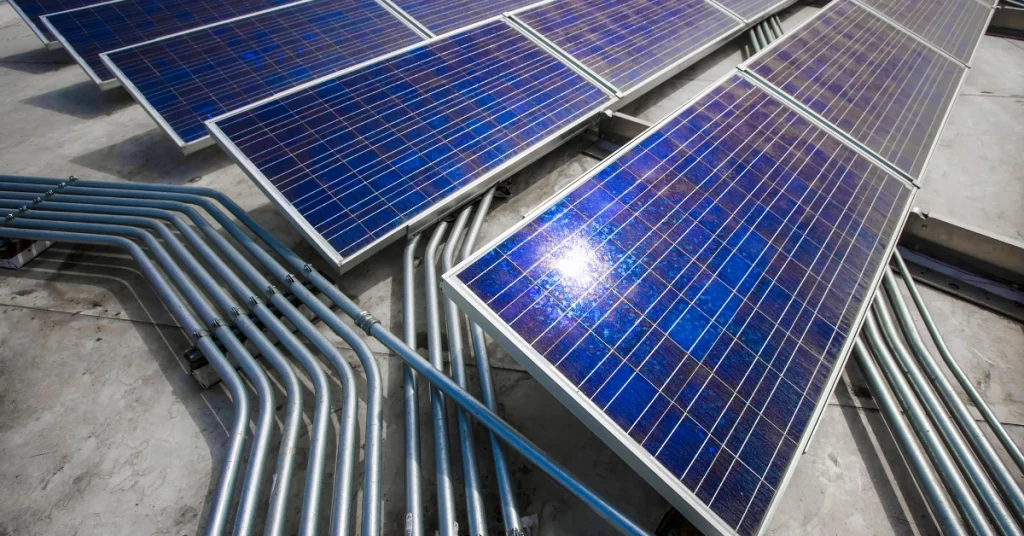
The solar supply chain is the network that turns raw materials into complete photovoltaic (PV) systems installed on homes, businesses, and utility-scale projects. It stretches far beyond solar panel assembly, encompassing polysilicon, ingots, wafers, cells, glass, aluminum frames, inverters, racking, electrical components, transportation, distribution, and installation.
For decades, much of this supply chain became concentrated outside the United States, particularly in China and Southeast Asia. Today, the U.S. is working to expand domestic manufacturing while solar companies simultaneously navigate trade policies, sourcing requirements, logistics risks, and rapidly changing equipment demand.
Understanding how the solar supply chain works is increasingly important for manufacturers, distributors, developers, EPCs, and installers that need dependable access to equipment.
What is the solar supply chain?
The solar supply chain includes every stage required to manufacture and deploy a photovoltaic system.
For crystalline-silicon solar modules, the process generally follows this sequence:
Raw silicon → polysilicon → ingots → wafers → solar cells → modules → distribution → installation
The U.S. Department of Energy (DOE) explains that module manufacturing also requires glass, encapsulants, backsheets, junction boxes, connectors, and aluminum frames. A complete solar installation then requires additional manufactured products such as inverters, wiring, combiner boxes, racking, and tracking structures.
This complexity means a disruption at one upstream stage can eventually affect equipment availability farther downstream.
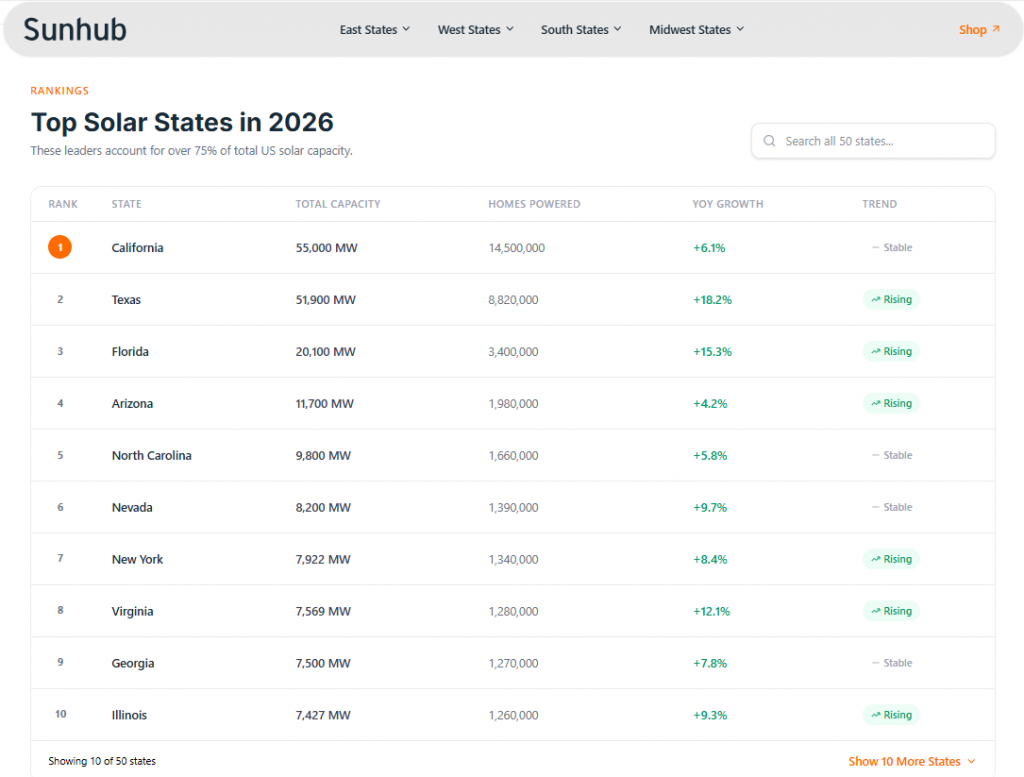
Explore U.S. Solar State Rankings
Compare solar rankings, installed capacity, growth trends, and market performance across all 50 states. Discover regional insights to support smarter procurement and expansion decisions.
Why the solar supply chain became global
Solar manufacturing shifted considerably toward Asia as manufacturers competed to reduce production costs and scale manufacturing.
The reference article from Art of Procurement highlights how China’s expansion of solar manufacturing dramatically reduced global module prices while simultaneously contributing to the decline of domestic U.S. manufacturing capacity.
DOE’s historical supply-chain assessment illustrates the scale of that concentration. In 2021, China held approximately 72% of global polysilicon manufacturing capacity, 98% of ingot capacity, 97% of wafer capacity, 81% of cell capacity, and 77% of module capacity.
Those figures are historical rather than current 2026 market shares, but they demonstrate why diversification has become such an important issue for U.S. solar companies and policymakers.
U.S. solar manufacturing is expanding
The domestic manufacturing picture has changed considerably.
DOE currently states that U.S. PV manufacturing has enough module manufacturing capacity to meet domestic demand. However, important gaps remain in the crystalline-silicon supply chain.
That distinction matters.
Assembling modules domestically does not necessarily mean every component inside those modules was manufactured in the United States. A manufacturer may still depend on imported:
- Polysilicon
- Ingots
- Wafers
- Solar cells
- Solar glass
- Aluminum
- Other components
The next challenge for the U.S. solar supply chain is therefore developing more complete upstream manufacturing capacity rather than focusing exclusively on final module assembly.
DOE maintains an active U.S. Solar Photovoltaic Manufacturing Map tracking domestic facilities across different portions of the PV supply chain.
Why wafers and cells matter
Crystalline-silicon manufacturing involves several technologically demanding stages before a finished solar module exists.
High-purity polysilicon is melted and formed into ingots. Those ingots are sliced into extremely thin wafers, which are then processed into photovoltaic cells. Cells are electrically connected and assembled with glass, encapsulation materials, backsheets, frames, and other components to create modules.
Building a module assembly facility can generally be faster and less capital-intensive than establishing upstream ingot, wafer, or cell production.
DOE has specifically identified upstream manufacturing as an area where additional U.S. capacity is important for strengthening the domestic supply chain.
Why supply chain diversification matters
A geographically concentrated supply chain can create vulnerabilities.
Potential disruptions include:
- International shipping delays
- Tariffs and trade disputes
- Factory shutdowns
- Material shortages
- Port congestion
- Regulatory changes
- Geopolitical instability
- Unexpected demand increases
A more diversified solar supply chain does not necessarily mean every component must be manufactured domestically. Instead, resilience can come from having multiple qualified suppliers, manufacturing regions, transportation routes, and equipment alternatives.
DOE describes a robust domestic manufacturing sector as a way to decrease dependence on foreign energy supplies while improving energy security and supporting reliable solar deployment.
Domestic content is becoming more important
The Art of Procurement reference article highlights an example involving Corning, Suniva, and Heliene, which announced plans to collaborate on solar modules containing significant U.S.-made content. The strategy extends beyond final module assembly by connecting domestically sourced silicon materials, solar cells, and module manufacturing.
This illustrates an important shift in how the industry discusses “American-made” solar.
Increasing domestic content requires coordination across several manufacturing stages. Building a module domestically while importing nearly all upstream components creates a different supply-chain profile from producing silicon, wafers, cells, and modules domestically.
Solar supply chain management for installers and EPCs
Supply-chain resilience is not only a concern for manufacturers and policymakers.
Installers, developers, distributors, and EPC contractors also need procurement strategies that reduce exposure to equipment shortages and project delays.
Important practices include:
Diversifying suppliers
Depending entirely on one supplier can create unnecessary risk. Procurement teams can maintain relationships with multiple qualified suppliers capable of providing equivalent equipment.
Identifying acceptable alternatives
Projects can become delayed when specifications allow only one exact component that becomes unavailable.
Where engineering requirements permit, establishing approved equivalent products can provide additional flexibility.
Monitoring lead times
Long-lead equipment should be identified early so procurement can align with engineering and construction schedules.
Confirming inventory
A supplier offering an attractive price is not useful if the equipment cannot arrive when construction begins. Buyers should verify actual inventory and delivery schedules before issuing purchase orders.
Maintaining documentation
Product certifications, manufacturing origin, warranty documentation, serial numbers, and other records are increasingly important throughout procurement and project development.
A new era of solar supply chain transparency
Supply-chain traceability is becoming increasingly important throughout the solar industry.
Solar companies increasingly need visibility into where materials originate, where components are manufactured, and how products move through different stages of production.
For buyers, greater transparency can improve:
- Supplier qualification
- Regulatory compliance
- Risk management
- Product verification
- Procurement planning
For manufacturers, it creates incentives to understand and document suppliers beyond their immediate Tier 1 relationships.
What the 2026 supply chain looks like
A 2026 national-laboratory assessment of U.S. PV and battery supply chains examines module manufacturing, structural and electrical balance-of-system components, manufacturing employment, government support, recycling, costs, and the domestic content of systems installed in the United States.
The broader picture is increasingly nuanced: the U.S. has significantly expanded domestic manufacturing capabilities, particularly downstream, but manufacturing location alone does not tell the complete story.
A resilient supply chain requires sufficient capacity across raw materials, components, manufacturing, logistics, distribution, and installation.
What comes next?
The next phase of U.S. solar manufacturing is likely to focus increasingly on filling gaps between raw materials and finished modules.
That means expanding:
- Polysilicon utilization
- Ingot manufacturing
- Wafer production
- Solar cell manufacturing
- Solar glass and component production
- Inverter manufacturing
- Racking and tracker production
- Recycling infrastructure
At the same time, businesses will need procurement strategies capable of adapting to changing trade rules, product availability, manufacturing locations, and customer requirements.
Conclusion
The solar supply chain is one of the most important, and often overlooked, parts of the clean energy industry. Every completed solar project depends on a long network extending from raw materials and manufacturing to transportation, procurement, distribution, and installation.
The United States has made significant progress expanding domestic solar manufacturing, particularly module production. However, DOE continues to identify gaps in the upstream crystalline-silicon supply chain.
For solar businesses, the lesson is clear: resilient procurement requires more than finding the lowest equipment price. Supplier diversification, inventory visibility, component traceability, flexible specifications, and long-term supply-chain planning are increasingly essential to keeping projects moving.
Frequently Asked Questions
What is the solar supply chain?
The solar supply chain includes the materials, manufacturing processes, equipment, logistics, distribution, and installation activities required to produce and deploy solar energy systems.
What are the main stages of the solar panel supply chain?
For crystalline-silicon panels, the major stages include polysilicon production, ingot growth, wafer manufacturing, solar cell production, module assembly, distribution, and installation.
Does the United States manufacture solar panels?
Yes. DOE states that U.S. manufacturing capacity can currently produce enough PV modules to meet domestic demand, although gaps remain in upstream crystalline-silicon manufacturing.
Why is solar supply chain diversification important?
Diversification can reduce exposure to manufacturing disruptions, shipping problems, trade restrictions, geopolitical risks, and shortages by providing multiple potential sources for critical equipment.
What can solar companies do to reduce supply-chain risk?
Companies can diversify suppliers, identify approved equipment alternatives, monitor lead times, confirm inventory before ordering, maintain strong product documentation, and incorporate supply-chain considerations earlier in project planning.