
Successful solar projects depend on much more than good engineering and installation. Behind every photovoltaic (PV) system is a complex process of sourcing modules, inverters, racking, batteries, electrical components, and supporting equipment. Managing that process effectively is known as solar procurement.
For installers, EPCs, developers, and commercial solar companies, procurement directly affects project cost, equipment quality, construction schedules, and long-term performance. The U.S. Department of Energy (DOE) emphasizes that equipment and design specifications established during procurement can help prevent vulnerabilities and contribute to a PV system that performs reliably throughout its operating life.
As supply chains become more complex, smart solar procurement increasingly means looking beyond the lowest equipment price and considering availability, specifications, compliance, supplier reliability, logistics, and lifecycle value.
What Is Solar Procurement?
Solar procurement is the process of identifying, evaluating, sourcing, purchasing, and coordinating the equipment and services required to complete a solar project.
Depending on the project, procurement may cover:
- Solar panels
- Inverters
- Battery energy storage systems
- Racking and mounting equipment
- Transformers and switchgear
- Wiring and connectors
- Monitoring equipment
- Balance-of-system components
- Freight, warehousing, and delivery
For an EPC contractor, procurement sits between engineering and construction. Engineering determines what a project requires; procurement ensures the correct equipment reaches the project at the right time and under appropriate commercial terms.
DOE guidance recommends incorporating technical specifications throughout procurement, contractor selection, design review, equipment delivery, commissioning, and verification.
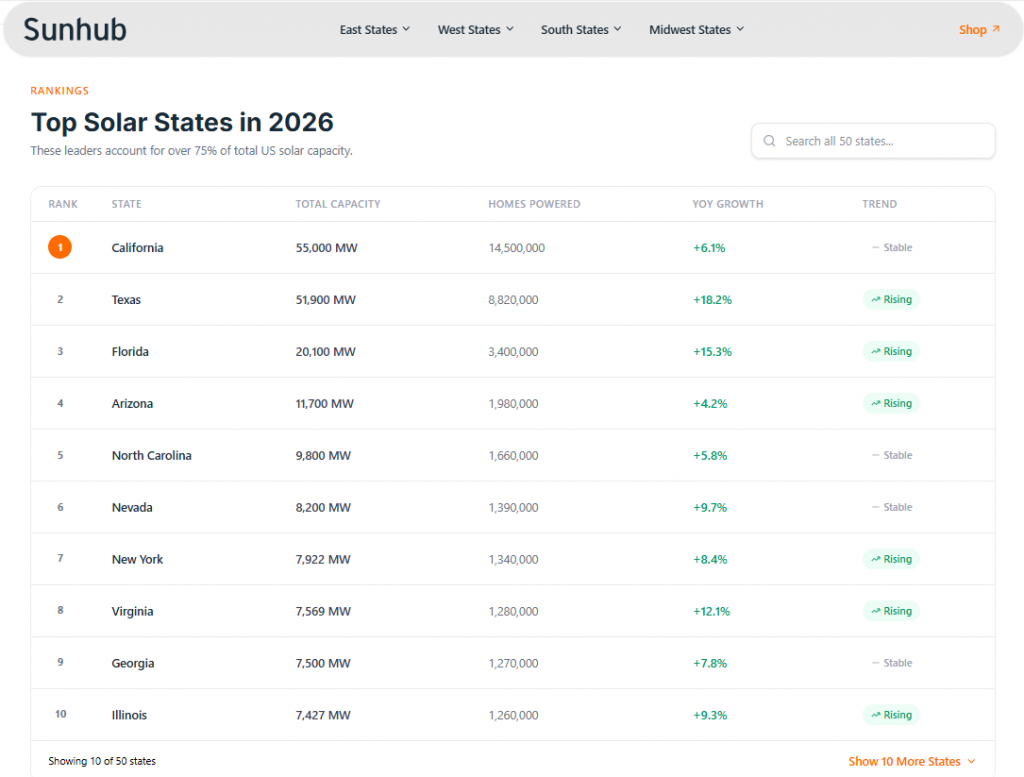
Explore U.S. Solar State Rankings
Compare solar rankings, installed capacity, growth trends, and market performance across all 50 states. Discover regional insights to support smarter procurement and expansion decisions.
Why Solar Procurement Matters
A project’s equipment decisions can affect performance for decades. Choosing a component based solely on its purchase price can create additional costs if the equipment has poor compatibility, inadequate warranties, uncertain availability, or unsuitable performance characteristics.
Effective procurement considers several factors simultaneously:
Technical performance: Wattage, efficiency, temperature coefficients, degradation, electrical characteristics, and equipment compatibility should match the project design.
Availability: A technically ideal product offers little value if it cannot arrive before construction begins.
Warranty coverage: Buyers should review both product and performance warranties and understand who is responsible for handling future claims.
Logistics: Freight requirements, delivery windows, storage, pallet quantities, and job-site access can all affect total project cost.
Supplier reliability: Procurement teams should evaluate whether suppliers can fulfill the quantity, documentation, delivery, and support requirements promised in their proposals.
The goal is therefore not simply to purchase equipment cheaply. It is to obtain equipment that satisfies the project’s technical and commercial requirements while controlling risk.
Start With Clear Technical Requirements
One of the most effective ways to improve solar procurement is to define project requirements before requesting supplier quotes.
A procurement package may specify:
- Required module wattage range
- System voltage
- Inverter architecture
- Required certifications
- Racking configuration
- Battery capacity and power requirements
- Quantity
- Delivery location
- Required delivery date
- Acceptable manufacturers or equivalents
DOE recommends establishing technical specifications early and carrying them through procurement documents, design drawings, submittal reviews, delivery, and commissioning.
Clear specifications also make supplier proposals easier to compare. If every vendor is quoting against different assumptions, the lowest bid may not actually represent the lowest project cost.
Use Competitive RFQs to Compare Suppliers
A Request for Quote (RFQ) is particularly useful when equipment requirements are already established.
Instead of contacting suppliers individually, procurement teams can provide the same requirements to multiple vendors and compare their responses.
Quotes should be evaluated across factors such as:
- Equipment price
- Freight
- Product availability
- Lead time
- Warranty terms
- Payment terms
- Manufacturer and model
- Technical compliance
- Delivery conditions
For solar professionals looking to centralize this process, Sunhub’s solar procurement RFQ platform allows buyers to post equipment requests and receive competitive quotes from verified suppliers for panels, inverters, batteries, and racking.
Competitive sourcing can improve price discovery, but the lowest quote should still be evaluated against technical suitability and supplier risk.
Supply Chain Risk Is Now Part of Procurement
Solar equipment supply chains stretch across raw materials, manufacturing, transportation, warehousing, distribution, and final installation.
That creates potential exposure to shipping disruptions, trade actions, material shortages, manufacturing constraints, and compliance issues. SEIA noted in its 2026 supply-chain outlook that U.S. solar and storage businesses continue to navigate changing tariffs and trade actions that can introduce uncertainty into equipment sourcing.
Procurement teams can reduce exposure by:
- Qualifying alternative suppliers
- Identifying equivalent equipment
- Ordering long-lead items early
- Confirming inventory before awarding orders
- Coordinating construction and delivery schedules
- Maintaining accurate supplier documentation
For larger project portfolios, demand forecasting can also help teams consolidate orders and secure equipment earlier.
Traceability and Compliance Matter
Modern solar procurement also involves understanding where products and materials originate.
SEIA’s Solar and Energy Storage Supply Chain Traceability Standard (SEIA 101) establishes requirements for documenting material inputs and tracing their movement through the supply chain. It includes due-diligence, data-collection, and traceability-management requirements intended to help organizations address supply-chain risks and regulatory obligations.
For developers and EPCs, supplier documentation should therefore be considered part of procurement, not an administrative task that begins after equipment has already been purchased.
Quality Assurance Should Continue After Purchase
Procurement does not end when a purchase order is issued.
When equipment arrives, project teams should confirm:
- Correct manufacturer and model
- Correct quantities
- Serial numbers where required
- Packaging condition
- Shipping damage
- Required certifications and documentation
- Compliance with approved project specifications
DOE notes that procurement specifications should remain relevant through equipment delivery and commissioning.
Early inspection can prevent an incorrect or damaged shipment from becoming an installation delay.
Price vs. Total Procurement Value
Equipment price matters, particularly on large commercial and utility-scale projects where small unit-price differences can multiply across thousands of components.
But price is only one part of procurement value.
Consider two suppliers offering the same module. One has a slightly lower unit price but uncertain inventory and a long delivery window. Another provides confirmed stock, stronger commercial terms, and delivery aligned with the construction schedule.
The second offer could ultimately cost the project less by reducing schedule and logistics risk.
Procurement teams should therefore evaluate total delivered value, including equipment, freight, lead time, warranties, compatibility, and supplier reliability.
The Future of Solar Procurement
As solar deployment expands, procurement is becoming increasingly digital and data-driven.
Online sourcing platforms can make it easier to distribute equipment requests, compare suppliers, identify available inventory, and manage competitive quotes without relying entirely on individual emails and phone calls.
At the same time, supply-chain transparency is becoming increasingly important. SEIA’s standards now address sourcing, manufacturing, transportation, installation, operations, and recycling across the solar and energy storage lifecycle.
For solar businesses, procurement is becoming a strategic capability rather than a back-office purchasing function.
Conclusion
Effective solar procurement connects engineering requirements with successful construction. The right strategy ensures that appropriate panels, inverters, batteries, racking, and balance-of-system equipment arrive when needed, meet project specifications, and support reliable long-term performance.
Successful procurement requires clear technical requirements, competitive supplier evaluation, quality assurance, supply-chain planning, and careful consideration of total delivered value.
For installers, EPCs, developers, and other solar professionals, combining disciplined procurement practices with digital RFQ tools can make equipment sourcing faster, more transparent, and better aligned with project requirements.
Frequently Asked Questions
What is solar procurement?
Solar procurement is the process of sourcing, evaluating, purchasing, and coordinating the equipment and services required for a solar project, including panels, inverters, racking, batteries, electrical equipment, and logistics.
Why is procurement important in solar projects?
Procurement affects equipment quality, project costs, construction schedules, system compatibility, and long-term reliability. DOE recommends incorporating technical requirements throughout procurement, delivery, and commissioning.
What should a solar RFQ include?
An RFQ should clearly identify equipment specifications, quantities, certifications, delivery location, required dates, and other commercial requirements so suppliers can submit comparable offers.
Should solar equipment be selected based on price?
Not exclusively. Buyers should compare total delivered value, including technical performance, warranty coverage, availability, freight, lead times, compliance, and supplier reliability.
How can solar companies streamline procurement?
Companies can standardize technical requirements, prequalify suppliers, compare competitive RFQs, plan long-lead purchases early, and use digital sourcing platforms to centralize supplier responses.