

Electricity is a recurring operating expense for virtually every company. Offices need lighting and HVAC, warehouses rely on refrigeration and equipment, manufacturers operate machinery, and retailers consume electricity throughout the business day.
For companies looking to manage those costs over the long term, solar for your business can be worth considering.
Solar for your business allows a company to generate electricity directly at its property, potentially reducing the amount of electricity purchased from the grid. Depending on the project, businesses may also benefit from federal tax incentives, depreciation, battery storage, and greater control over future energy expenses.
But solar isn’t automatically a good investment for every company. Electricity consumption, utility rates, available space, project cost, financing, tax eligibility, and interconnection requirements all influence the final return.
Here’s what businesses should evaluate in 2026..

Explore U.S. Solar State Rankings
Compare solar rankings, installed capacity, growth trends, and market performance across all 50 states. Discover regional insights to support smarter procurement and expansion decisions.
Why businesses are looking at solar
The basic model for solar for your business is relatively straightforward.
Solar panels installed on a business property generate electricity during daylight hours. When the facility consumes that electricity onsite, it can reduce the amount of electricity that must be purchased from the utility.
That matters as electricity costs change.
According to the U.S. Energy Information Administration (EIA), the average commercial electricity price nationwide was 13.41 cents per kilowatt-hour in 2025, compared with 10.43 cents in 2016. In June 2026, the national commercial average reached 14.19 cents per kWh, up 4.8% from June 2025.
Actual electricity prices vary significantly by location, utility, rate structure, and customer type, so national averages shouldn’t be used to calculate an individual project’s savings.
Still, generating electricity onsite gives businesses another way to manage a significant operating expense.
1. Reduce electricity purchased from the grid
The most direct financial benefit of solar for your business comes from electricity the business no longer needs to purchase.
Consider a business with substantial electricity consumption during daylight hours. When its solar system is generating electricity at the same time the facility is operating, that electricity can be consumed directly onsite.
The value depends on several variables:
- Annual electricity consumption
- Daytime load
- Solar system size
- Local solar resource
- Utility electricity rates
- Demand charges
- Export compensation
- System performance
For this reason, businesses should avoid sizing a solar system based only on available roof space.
The better starting point is the facility’s actual electricity profile.
Reviewing at least 12 months of utility bills—and interval load data for larger facilities—can help determine when electricity is being consumed and how solar production could align with that demand.
2. Turn commercial property into an energy asset
Many businesses have underused physical space that can potentially accommodate solar.
Large warehouses and factories may have extensive rooftops. Businesses with unused property can evaluate ground-mounted systems, while parking lots may offer opportunities for solar carports.
Possible commercial configurations include:
Rooftop solar: Uses existing building space without requiring additional land.
Ground-mounted solar: Can accommodate larger systems when sufficient property is available.
Solar carports: Generate electricity while providing covered parking.
The right option depends on available space, structural conditions, shading, electrical infrastructure, local regulations, and project economics.
For rooftop projects, roof condition deserves particular attention. Installing solar on a roof likely to require replacement soon can create additional costs if the system later needs to be removed and reinstalled.


3. Federal tax credits can improve project economics
Tax incentives can substantially influence the financial performance of solar for your business, but companies developing projects in 2026 need to use current rules.
The federal Clean Electricity Investment Credit under Section 48E applies to qualifying clean-electricity facilities and energy storage technology placed in service after December 31, 2024.
The IRS lists a base credit of 6% of qualified investment, potentially increasing to 30% for facilities satisfying applicable prevailing-wage and apprenticeship requirements. Additional increases may be available when qualifying domestic-content or energy-community requirements are met.
However, federal legislation enacted in 2025 changed the timeline for wind and solar projects.
IRS Notice 2025-42 explains that applicable solar facilities subject to the new termination provisions can lose eligibility if placed in service after December 31, 2027. The rules governing whether a project is affected depend partly on when construction begins.
For businesses beginning solar development in 2026, project scheduling is therefore particularly important.
Engineering, permitting, equipment procurement, construction, utility interconnection, and commissioning should all be considered when determining whether a project can meet applicable tax-credit requirements.
4. Depreciation can provide another business tax benefit
Solar for your business may also qualify for depreciation deductions.
Unlike a tax credit, which generally reduces tax liability directly, depreciation reduces taxable income by allowing qualifying businesses to recover eligible property costs.
The exact treatment depends on the property, placed-in-service date, tax basis, available credits, and taxpayer.
Depreciation can significantly change the after-tax economics of a commercial project, which is why it should be incorporated into the financial model rather than treated as an afterthought.
Businesses should work with qualified tax professionals to determine their project’s eligible basis and applicable depreciation treatment.
5. Solar Can Provide Greater Long-Term Energy Cost Visibility
A solar installation doesn’t eliminate a company’s utility bill.
Businesses may still purchase grid electricity when solar generation is insufficient and may continue paying fixed charges, demand charges, or other utility fees.
What solar can do is reduce dependence on purchased electricity.
That can provide greater visibility into a portion of the company’s future energy costs because much of the system’s capital cost is established when the project is developed.
Businesses should compare the complete lifetime cost of the solar system with the expected value of the electricity it generates.
A good financial analysis should consider:
- Initial project cost
- Financing costs
- Expected electricity production
- Utility rates
- System degradation
- Operations and maintenance
- Equipment replacement assumptions
- Tax incentives
- Depreciation
- Expected system life
This provides a more realistic picture than looking only at the upfront installation price.
6. Battery storage can expand what solar does
Solar for your business and battery storage serve different functions.
Solar panels generate electricity. Batteries store electricity so that it can be used later.
Depending on the facility and utility tariff, businesses may use storage for:
- Peak-demand management
- Energy shifting
- Greater solar self-consumption
- Backup for selected loads
- Resilience
- Time-of-use optimization
A battery doesn’t automatically make every commercial solar project more profitable.
For some businesses, the additional cost may not be justified. For others—particularly facilities with expensive peak demand or significant outage costs—storage can add substantial operational value.
Solar and storage should therefore be modeled both separately and together.
7. Solar can support business sustainability goals
Companies are also using solar as part of broader sustainability and energy strategies.
Onsite solar can reduce the amount of grid electricity a business purchases while supporting internal renewable-energy or emissions-reduction goals.
For businesses reporting environmental performance to customers, investors, supply-chain partners, or employees, onsite renewable generation can provide a visible component of a wider sustainability strategy.
Solar can also be combined with energy-efficiency improvements, electrification, EV charging, battery storage, and energy-management systems.
Importantly, sustainability doesn’t need to replace financial reasoning.
The strongest projects for solar for your business are generally those where environmental objectives and business economics support each other.
8. Don’t ignore interconnection
Before a company can use solar for your business in parallel with the electric grid, it generally needs to complete the applicable utility interconnection process.
Depending on project size and location, this may involve:
- An interconnection application
- Technical review
- Electrical diagrams
- Engineering studies
- Metering changes
- Protection requirements
- Grid upgrades
- Inspection
- Authorization to operate
Interconnection can become particularly important for larger commercial projects.
If the utility determines that infrastructure upgrades are required, those costs and timelines can materially affect the project’s economics.
Businesses should investigate interconnection requirements during feasibility—not after equipment has already been ordered.
Current Section 48E regulations also allow certain qualifying interconnection expenditures associated with facilities of no more than 5 MW AC to be included in qualified investment under specified conditions.
9. Equipment selection affects long-term value
A commercial solar project is expected to operate for many years, making equipment quality and compatibility important.
Commercial systems can include:
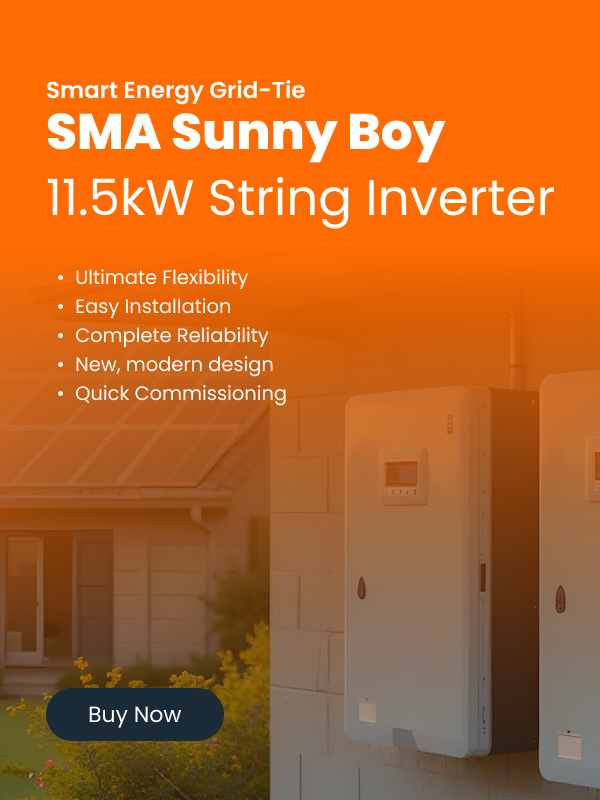
- Solar modules
- Inverters
- Mounting and racking
- Transformers
- Switchgear
- Wiring and connectors
- Monitoring equipment
- Battery storage
Businesses and EPCs should evaluate more than purchase price.
Important procurement considerations include product certifications, warranty terms, degradation, equipment compatibility, manufacturer support, supplier reliability, inventory availability, and delivery schedules.
Saving money on equipment upfront provides little value if an unavailable or incompatible component delays the entire project.
10. How to calculate whether business solar is worth it
There is no universal payback period for solar for your business.
Two neighboring businesses can receive completely different returns because they consume electricity differently.
A useful financial analysis should begin with actual utility data and model the project’s expected electricity production.
From there, businesses can evaluate metrics such as:
Simple payback: How long it takes cumulative savings to recover the initial investment.
Net present value (NPV): The present value of future project cash flows after accounting for the time value of money.
Internal rate of return (IRR): The estimated rate of return generated by the investment.
Levelized cost of energy (LCOE): The average lifetime cost of producing electricity from the system.
No single metric tells the complete story. Evaluating several provides a clearer view of whether the investment meets the company’s financial objectives.
Questions to ask before installing solar
Before moving forward with solar for your business, companies should be able to answer a few fundamental questions.
How much electricity does the facility consume each year? When does it consume that electricity? Is the roof or available land suitable for solar? What utility tariff applies? What are the interconnection requirements? How will the project be financed? Which current tax incentives actually apply? And does the company expect electricity demand to change?
Future demand deserves particular attention.
Businesses planning EV charging, additional production lines, electric heating, facility expansion, or new equipment may want to incorporate those loads into their solar planning.
Designing solely around today’s electricity consumption could result in a system that no longer matches the facility several years later.
Conclusion
Choosing solar for your business can be a long-term financial and operational decision rather than simply a sustainability initiative.
A properly designed commercial system can reduce grid electricity purchases, turn unused property into an energy-producing asset, provide greater visibility into energy expenses, and potentially benefit from available federal tax provisions.
But successful projects depend on planning.
Businesses should analyze their actual electricity consumption, evaluate their property, investigate interconnection requirements, compare financing options, understand current tax rules, and select equipment based on long-term project value.
That planning is particularly important in 2026 because federal rules affecting solar investment credits have changed and project timing can influence eligibility.
For businesses with suitable energy loads and properties, solar can become an infrastructure investment designed to produce both electricity and economic value for years to come.
Frequently asked questions
Is solar worth it for a business in 2026?
It can be. The answer depends on electricity consumption, utility rates, installation costs, financing, tax eligibility, solar production, interconnection costs, and system performance. A project-specific financial model is the best way to determine whether solar meets a company’s investment requirements.
What is the federal commercial solar tax credit in 2026?
Section 48E provides a Clean Electricity Investment Credit for qualifying facilities. The IRS lists a 6% base credit that can increase to 30% when applicable prevailing-wage and apprenticeship requirements are met, with potential additional increases for certain qualifying projects. Eligibility depends on project-specific requirements.
Are commercial electricity prices increasing?
EIA data show that the national annual average commercial electricity price increased from 10.43 cents/kWh in 2016 to 13.41 cents/kWh in 2025. In June 2026, the national commercial average was 14.19 cents/kWh, 4.8% higher than in June 2025. Actual rates vary substantially by location and utility.
Does a business need batteries with solar?
No. Solar for your business can operate without battery storage. Batteries may be useful for demand management, energy shifting, backup power, or other operational objectives depending on the facility.
How should a business size a solar system?
Sizing should begin with actual electricity consumption and load patterns rather than simply filling all available roof space. Available installation area, solar resource, utility rules, future energy demand, and project economics should also be considered.
Sources
IRS — Clean Electricity Investment Credit
IRS — Notice 2025-42: Beginning-of-Construction Requirements for Wind and Solar Facilities
IRS — 2026 Clean Electricity Investment Credit Regulations
U.S. Energy Information Administration — Electricity Prices and Factors Affecting Prices
U.S. Energy Information Administration — Electric Power Monthly