
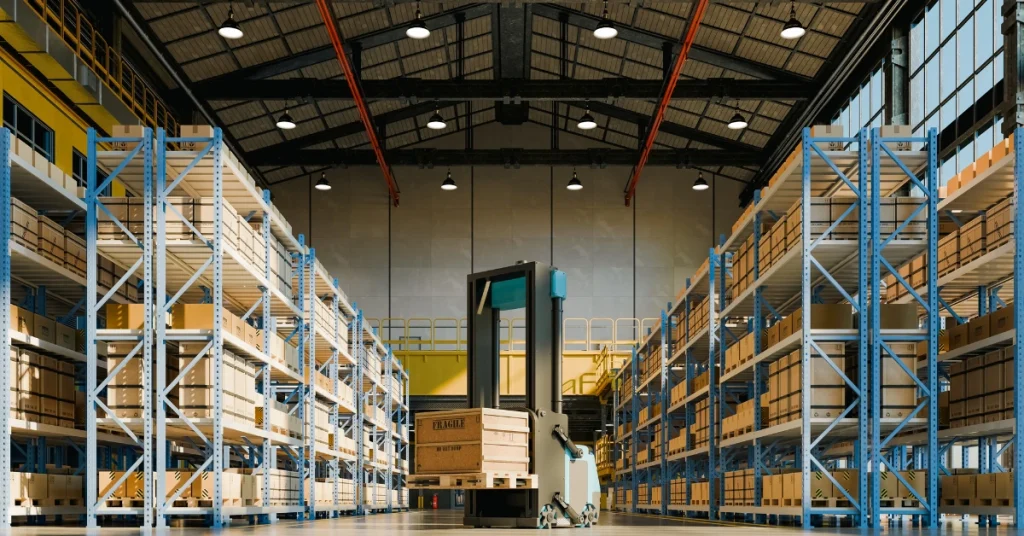
Solar panels are built to withstand decades of outdoor exposure, but improper storage and handling can damage them before they are installed. From cracked glass and cell microcracks to misplaced inventory and delayed deliveries, poor warehouse practices can create significant costs for solar businesses.
Solar panel warehousing involves more than finding enough space to store photovoltaic (PV) modules. It requires appropriate storage conditions, specialized handling procedures, inventory tracking, and coordinated distribution.
For solar distributors, EPC contractors, installers, and project developers, effective warehousing helps protect equipment quality while keeping projects on schedule.
Table of Contents

Explore U.S. Solar State Rankings
Compare solar rankings, installed capacity, growth trends, and market performance across all 50 states. Discover regional insights to support smarter procurement and expansion decisions.
What Is Solar Panel Warehousing?
Solar panel warehousing refers to the storage, management, and distribution of photovoltaic modules before they reach their installation sites.
A solar warehouse may receive equipment directly from manufacturers, hold inventory for distributors, or temporarily store modules awaiting delivery to construction projects.
Common warehousing activities include:
- Receiving and inspecting shipments
- Storing packaged solar modules
- Tracking inventory and serial numbers
- Managing pallet movement and order fulfillment
- Coordinating outbound transportation
- Documenting damaged or returned equipment
Unlike conventional consumer goods, solar panels require careful handling because their glass surfaces and internal photovoltaic cells can be damaged by mechanical stress.
Why Proper Solar Panel Storage Matters
Solar modules contain multiple layers, including glass, encapsulants, photovoltaic cells, and protective rear materials.
Although these components are designed for long-term outdoor operation, packaged modules can be vulnerable to improper handling.
For example, excessive pressure, accidental impacts, or incorrect stacking may contribute to cell cracks that are not immediately visible.
Poor storage conditions can also damage cartons and pallets, making equipment harder to transport safely.
Proper warehousing reduces these risks while helping businesses maintain accurate records of equipment condition and availability.
Best Practices for Solar Panel Warehousing
1. Follow manufacturer storage requirements
Solar panels should remain in their original protective packaging whenever possible.
Manufacturers typically provide instructions covering pallet orientation, stacking limits, moisture exposure, and handling procedures.
These requirements vary by module design and packaging configuration.
Warehouse operators should not assume that pallets from different manufacturers can be stacked or handled identically.
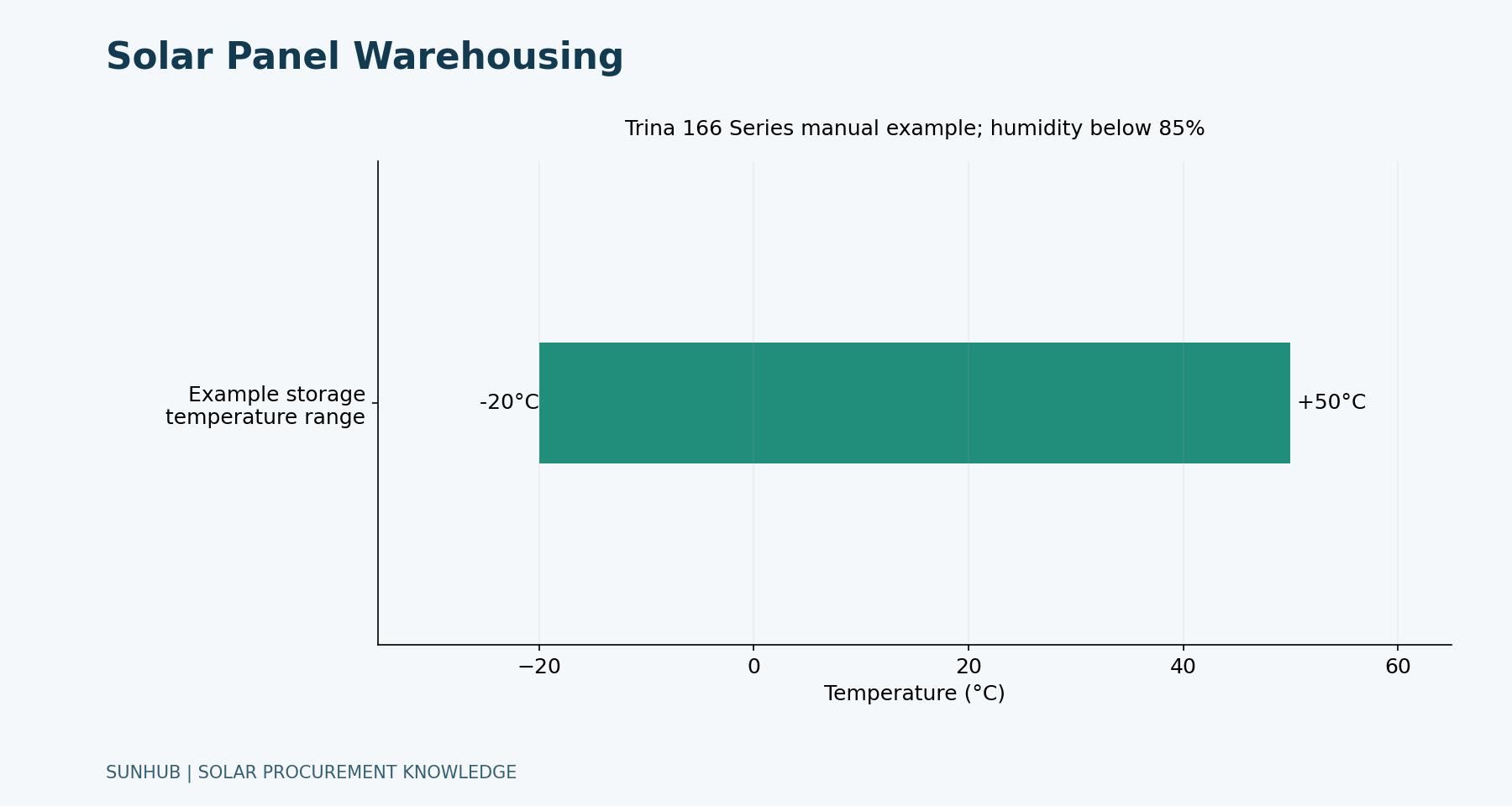
2. Maintain appropriate storage conditions
Indoor storage generally provides better protection for packaged solar panels against rain, standing water, and extreme environmental exposure.
Warehouses should maintain dry, stable storage areas and protect packaging from moisture damage.
If outdoor storage is unavoidable, operators should follow the manufacturer’s specific instructions for temporary outdoor storage.
3. Use proper material-handling equipment
Forklifts and pallet jacks are commonly used to move packaged solar modules.
Operators should verify pallet weights, equipment capacity, and approved lifting points before moving shipments.
Sudden impacts, uneven lifting, and unsupported pallet movement can damage both packaging and modules.
4. Maintain inventory visibility
Inventory management systems help track incoming shipments, stored equipment, and outgoing orders.
Serial-number records can also support warranty claims, shipment traceability, and quality-control investigations.
5. Inspect equipment during receiving and dispatch
Warehouses should document visible packaging damage, pallet deformation, and signs of mishandling.
Photographs, receiving reports, and shipment records provide useful evidence if transportation damage is discovered later.
Solar Panel Warehouse Storage Requirements
The following table summarizes important considerations for photovoltaic module storage.
| Storage factor | Recommended practice | Risk addressed |
|---|---|---|
| Packaging | Retain manufacturer-approved packaging | Physical damage |
| Moisture | Keep cartons and pallets dry | Packaging deterioration |
| Stacking | Follow specified stacking limits | Excessive mechanical stress |
| Pallet handling | Use approved lifting procedures | Glass and cell damage |
| Inventory records | Track quantities and serial numbers | Lost or incorrect inventory |
| Warehouse layout | Maintain safe access and movement routes | Handling accidents |
| Shipment inspection | Document damage at receiving and dispatch | Undetected transport damage |
Specific requirements should always be confirmed against the applicable manufacturer’s documentation.
Inventory Management for Solar Panel Warehouses
Solar equipment inventories can include multiple module wattages, dimensions, manufacturers, and product generations.
Without accurate tracking, warehouses may ship incompatible products or delay project deliveries.
A warehouse management system (WMS) can help organize inventory by SKU, manufacturer, model, and storage location.
For solar businesses, useful tracking information may include module serial numbers, batch numbers, pallet quantities, receiving dates, and assigned projects.
First-in, first-out (FIFO) inventory management can help reduce prolonged storage, although project-specific allocations and product compatibility may require different fulfillment priorities.
Effective inventory management also supports more accurate purchasing forecasts and reduces unnecessary stock accumulation.
Solar Panel Warehousing and Distribution
Warehousing and transportation are closely connected.
Solar panels often move through several locations before reaching their final installation sites, including manufacturing facilities, ports, distribution centers, and project warehouses.
Coordinating these movements helps reduce repeated handling and unnecessary transportation.
For example, a distributor may consolidate modules from multiple suppliers at a central warehouse before arranging project-specific deliveries.
An EPC contractor may instead use temporary storage to receive large equipment shipments before construction begins.
Solar businesses evaluating Sunhub’s procurement and fulfillment services can explore options for coordinating equipment sourcing, logistics, and order management.

Common Solar Panel Warehousing Mistakes
Several avoidable practices can increase storage costs and damage risks.
Overstacking pallets: Exceeding approved limits can place excessive pressure on packaging and modules.
Removing packaging prematurely: Unprotected panels are more vulnerable to handling damage.
Inadequate inventory tracking: Missing serial-number or pallet records can complicate fulfillment and warranty investigations.
Poor warehouse organization: Congested storage areas increase the likelihood of forklift impacts and accidental damage.
Ignoring receiving inspections: Undocumented shipping damage may become difficult to attribute later.
Preventing these problems requires documented procedures, employee training, and regular inventory audits.
How to Choose a Solar Panel Warehousing Provider
Businesses outsourcing solar panel storage should evaluate providers based on their experience handling fragile, oversized equipment.
Important considerations include:
- Suitable indoor storage space and handling equipment
- Experience with palletized photovoltaic modules
- Inventory tracking and reporting capabilities
- Receiving inspections and damage documentation
- Transportation and fulfillment coordination
- Insurance coverage and clearly defined liability terms
Pricing should be evaluated alongside handling quality, inventory visibility, and delivery reliability.
The lowest storage rate may not provide the best overall value if additional handling costs or equipment damage increase total expenses.
Conclusion
Solar panel warehousing plays an important role in protecting photovoltaic equipment and maintaining reliable supply chains.
Proper storage conditions, manufacturer-approved handling procedures, accurate inventory records, and coordinated distribution help reduce damage risks and project delays.
For solar distributors, installers, and EPC contractors, effective warehousing is not simply a storage expense. It is part of maintaining equipment quality, controlling logistics costs, and ensuring solar projects receive the right products at the right time.
Frequently Asked Questions
Can solar panels be stored outdoors?
Some manufacturers permit temporary outdoor storage under specific conditions. However, indoor storage is generally preferable for protecting packaging and reducing handling risks.
Can solar panel pallets be stacked?
Only when the manufacturer permits the specific stacking arrangement. Approved limits vary by module and packaging design.
How should solar panels be stored in a warehouse?
Modules should generally remain in manufacturer-approved packaging, be kept in suitable storage conditions, and be handled using approved equipment and procedures.
Why is inventory tracking important for solar panels?
Inventory tracking helps prevent shipment errors, supports product traceability, and provides documentation for warranty claims and quality-control investigations.