
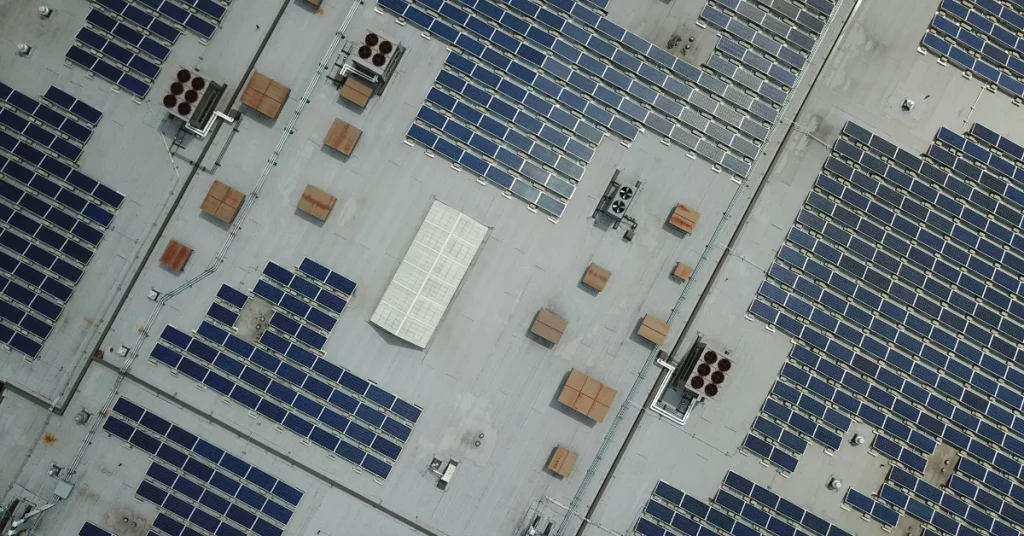
Commercial solar power is becoming a key part of the global energy transition, offering businesses a way to reduce operating costs, improve sustainability, and gain energy independence. While residential solar often gets the spotlight, the commercial and industrial (C&I) segment represents one of the largest untapped opportunities in the solar industry.
In 2026, as electricity demand rises and energy costs remain unpredictable, more businesses are turning to solar as a long-term solution. This guide explains what commercial solar power is, how it works, and why it is gaining momentum.
What is commercial solar power?
Commercial solar power refers to solar energy systems installed on commercial, industrial, or institutional properties. These systems are designed to meet the energy needs of businesses rather than individual households.
Commercial solar includes a wide range of customers, such as:
- Office buildings
- Retail stores and shopping centers
- Schools and universities
- Government facilities
- Factories and warehouses
Unlike residential systems, commercial solar projects can vary significantly in size. They can range from small systems of around 50 kilowatts (kW) to large installations exceeding several megawatts (MW) depending on the facility.
These systems are typically installed on rooftops, parking structures, or as ground-mounted arrays.
How commercial solar differs from residential solar
While both residential and commercial solar rely on photovoltaic (PV) technology to generate electricity, there are several key differences.
Scale and energy demand
Commercial systems are much larger because businesses consume more electricity than households. This allows for greater energy generation but also increases project complexity.
Customer types
Commercial solar serves a broader range of entities, including nonprofits, governments, and large corporations, not just homeowners.
System design flexibility
Commercial installations can be more diverse, using rooftops, carports, or large ground-mounted systems depending on available space.
Economics
Commercial electricity rates are often lower than residential rates, which can make the financial case for solar more complex in some cases.
For sourcing solar panels, batteries, and equipment with flexible pricing and direct supplier access, visit the Sunhub Negotiable Deals platform.
Types of commercial solar installations
Commercial solar power is not one-size-fits-all. Different installation types are used depending on the building and energy needs.
Rooftop solar systems
These are the most common installations, using unused roof space to generate electricity.
Ground-mounted systems
Used when businesses have available land, allowing for larger system sizes.
Solar carports
Installed over parking lots, providing both energy generation and shaded parking.
Industrial-scale systems
Large facilities such as factories or warehouses may use extensive solar arrays to meet high energy demands.
This flexibility is one of the reasons commercial solar is considered a high-growth segment within the solar industry.
Benefits of commercial solar power
Commercial solar offers a combination of financial, operational, and environmental benefits.
Reduced electricity costs
By generating their own electricity, businesses can significantly lower utility bills and protect themselves from rising energy prices.
Improved cash flow and operating income
Solar can reduce operating expenses, improving overall profitability for businesses.
Long-term energy price stability
Solar provides predictable energy costs over 20–30 years, reducing exposure to market volatility.
Sustainability and ESG goals
Businesses can reduce carbon emissions and align with environmental, social, and governance (ESG) targets.
Increased property value
Solar installations can enhance the value and attractiveness of commercial properties, especially for tenants seeking lower operating costs.
Challenges in commercial solar adoption
Despite its benefits, commercial solar adoption has historically lagged behind residential and utility-scale solar. Several challenges contribute to this.
High upfront costs
Commercial systems require larger investments, which can be a barrier for some businesses.
Complex financing structures
Financing commercial solar projects is often more complicated than residential systems, involving leases, power purchase agreements (PPAs), or third-party ownership models.
Split incentives
In many commercial buildings, tenants pay electricity bills while landlords own the property. This disconnect can reduce motivation to invest in solar.
Project complexity
Commercial installations involve more stakeholders, engineering requirements, and regulatory approvals, making projects more complex to execute.
For sourcing solar panels, batteries, and equipment with flexible pricing and direct supplier access, visit the Sunhub Negotiable Deals platform.
Financing options for commercial solar
To overcome upfront cost barriers, several financing models are commonly used.
Power purchase agreements (PPAs)
A third party installs and owns the solar system, and the business purchases electricity at a fixed rate over time.
Solar leases
Businesses pay a fixed monthly fee to use the system without owning it.
Direct ownership
Companies purchase the system outright, benefiting from full savings and incentives.
These financing options have played a major role in accelerating adoption by reducing initial capital requirements.
Growth potential of commercial solar power
Commercial solar has historically grown more slowly than other segments, but that is changing.
The sector is now positioned for significant expansion due to:
- Increasing electricity demand
- Stronger policy support and incentives
- Improved financing accessibility
- Growing corporate sustainability commitments
Large commercial buildings also present enormous untapped potential. For example, some facilities have enough rooftop space to generate energy equivalent to thousands of homes, highlighting the scale of opportunity.
As these barriers are addressed, commercial solar is expected to become a major driver of overall solar industry growth.

What commercial solar power means for businesses in 2026
In 2026, commercial solar is no longer just a sustainability initiative. It is a strategic financial and operational decision.
Businesses adopting solar can:
- Reduce long-term operating costs
- Improve energy resilience
- Strengthen brand positioning through sustainability
- Gain a competitive advantage in energy-intensive industries
For developers, EPCs, and investors, the commercial segment offers larger project sizes and higher revenue potential, even though projects are more complex.
Conclusion
Commercial solar power represents one of the most important growth areas in the renewable energy industry. While it comes with unique challenges, the long-term benefits in cost savings, sustainability, and energy independence make it an increasingly attractive option for businesses.
As technology improves and financing becomes more accessible, commercial solar is expected to play a central role in the transition to clean energy.
For companies willing to navigate the complexity, the opportunity is significant.